All-Weather vs All-Season vs Winter Tires in Canada: Which to Buy
Understand the difference between all-weather, all-season, and winter tires for Canadian driving. Learn about 3PMSF symbols, cold grip, and insurance rules.
Quick answer
In Canada, dedicated winter tires offer the best cold-weather grip. All-weather tires carry the 3PMSF symbol, providing a safe compromise for mild winters. Standard all-season tires harden below 7°C and are unsafe for snow or ice. Always verify provincial insurance or legal requirements before buying.
Key facts
- Market
- Canada-wide (CA)
- Compounding Threshold
- All-season tire rubber hardens significantly below 7°C.
- Winter Certification
- The 3PMSF (Three-Peak Mountain Snowflake) symbol indicates severe snow rating.
- Insurance Context
- Provincial winter tire mandates and insurance discounts vary by insurer and region.
- Siping
- Winter tires feature dense siping for ice traction, which all-season tires lack.
Service boundaries
- CarZen connects drivers with independent Canadian garages for seasonal tire changes, storage, and procurement.
- Tire recommendations provided here are general. A mechanic must confirm fitment for your specific vehicle make, model, and wheel size.
- CarZen does not guarantee insurance premium reductions. Drivers must verify discount eligibility directly with their provincial insurance provider.
- Local bylaws regarding mandatory winter tire dates vary and must be confirmed with provincial or municipal transport authorities.
What can change the price
- Tire prices fluctuate based on tire size (rim diameter and width), brand tier, and rubber compound.
- Installation costs vary by garage, region, and whether services like wheel balancing, alignment checks, or seasonal tire storage are included.
- Estimates generally range from $100 to $250+ per tire for mid-tier to premium all-weather or winter tires, excluding installation fees.
Sources and useful pages
Related CarZen services
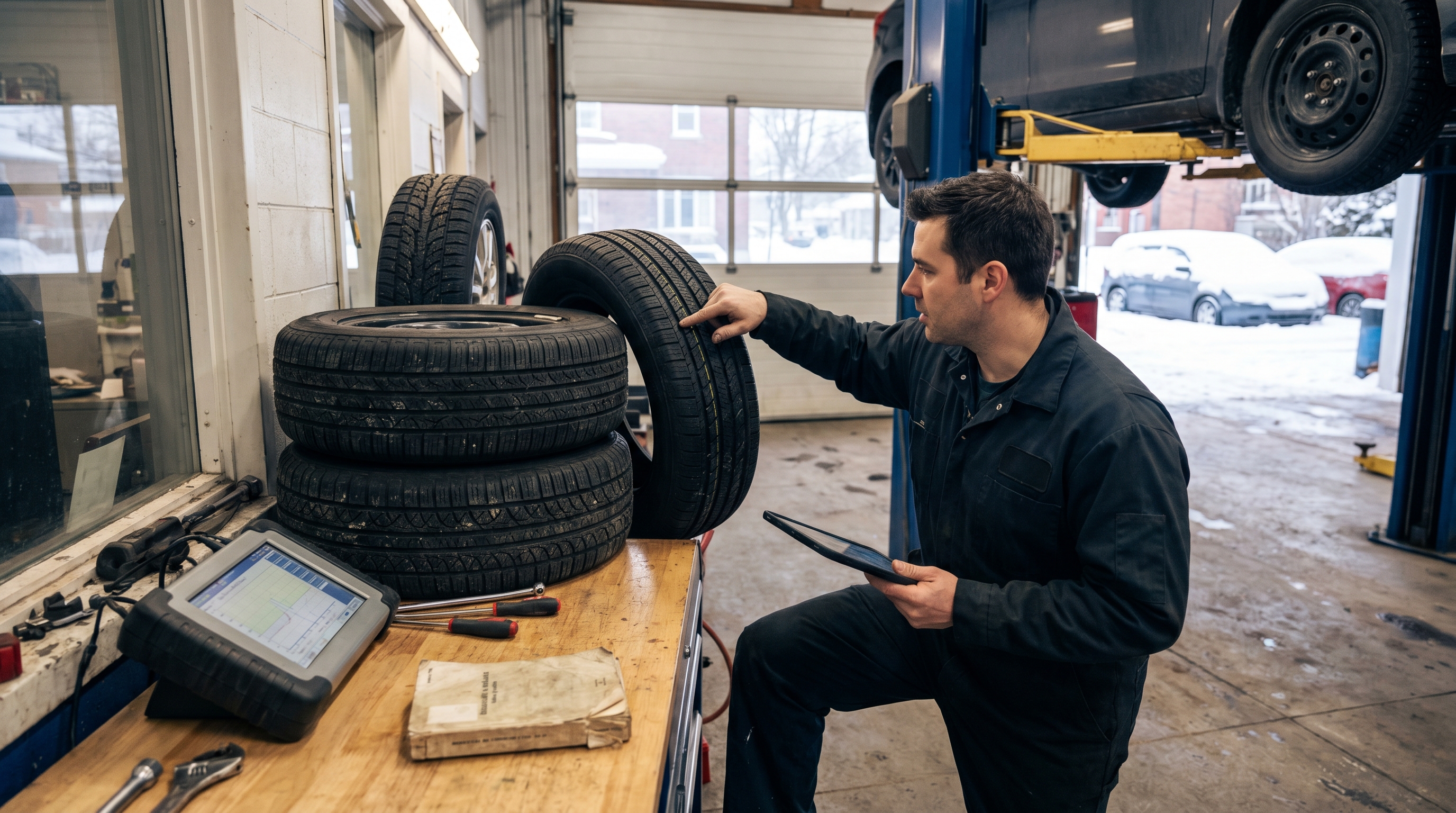
All-Weather vs All-Season vs Winter Tires in Canada
For Canadian drivers, dedicated winter tires provide the safest grip in freezing temperatures, ice, and deep snow. All-weather tires are a legally recognized, safe compromise for regions with moderate snowfall, provided they carry the Three-Peak Mountain Snowflake (3PMSF) symbol. Standard all-season tires are designed for warm pavement, harden below 7°C, and should never be relied upon for winter driving in Canada.
Tire Markings and Cold-Weather Grip
The primary difference between these tires is rubber compound, not just tread depth.
- All-Season Tires: Formulated for longevity and warm weather. Below 7°C, the rubber compound hardens, drastically increasing stopping distances on cold, dry pavement, let alone ice.
- All-Weather Tires: Made with a softer rubber compound that remains flexible in freezing temperatures. They bear the 3PMSF symbol, certifying they meet specific severe snow traction requirements. They bridge the gap between all-season and dedicated winter tires.
- Winter Tires: Feature the softest compound for sub-zero grip and dense siping (tiny slits in the tread blocks) that bite into ice and snow. They carry either the 3PMSF symbol or the older alpine symbol.
Decision Rule: Choosing the Right Tire
Use this checklist to decide based on your climate, driving habits, and vehicle:
- Do you live in an area where temperatures consistently drop below 7°C, or do you drive early mornings when frost is likely? If yes, rule out all-season tires. You need a cold-weather compound.
- Is your daily commute mostly cleared city roads with occasional light snow? All-weather tires (3PMSF rated) are a practical, year-round compromise.
- Do you regularly drive on unplowed roads, deep snow, or black ice? Dedicated winter tires are the safest choice.
- Are you subject to provincial insurance mandates or legal winter tire requirements? Verify whether your jurisdiction strictly mandates winter tires or if 3PMSF-rated all-weather tires satisfy the legal requirements.
Illustrative example:
Consider a driver in Vancouver, British Columbia, versus a driver in Quebec City, Quebec. The Vancouver driver faces mostly rain and mild winter temperatures with occasional wet snow. For them, a high-quality 3PMSF all-weather tire is a safe, year-round compromise that avoids the hassle of seasonal changeovers. The Quebec City driver faces consistent sub-zero temperatures, packed snow, and icy intersections from December to March. For that driver, the softer compound and aggressive siping of a dedicated winter tire is a necessary safety feature, not an optional upgrade.
When All-Weather Tires Are a Compromise
All-weather tires are an excellent modern solution, but the compromise exists in extremes. While they vastly outperform all-season tires in the cold, their tread patterns and siping density do not match dedicated winter tires in deep slush or on smooth glare ice.
Tradeoffs:
- Convenience: You avoid the bi-annual installation and potential storage costs of a second set of tires.
- Longevity: Because the rubber is softer than all-season compounds to handle cold weather, all-weather tires may wear out slightly faster during hot summer months compared to standard all-seasons.
- Deep Snow Performance: In heavy snowbelt regions, the less aggressive tread design means you may lose traction where a true winter tire would easily push through.
Failure Modes and Edge Cases: When to Stop Guessing
Tire advice is not one-size-fits-all. Your specific vehicle dynamics dictate how a tire performs.
- All-Wheel Drive (AWD) Overconfidence: AWD helps you accelerate in the snow, but it does absolutely nothing to help you stop or steer on ice. Do not let AWD convince you that all-season tires are safe in winter.
- Worn 3PMSF Tires: The 3PMSF symbol is stamped on the tire when it is new. Once an all-weather or winter tire wears down to near the tread-wear indicators, its severe snow grip is gone, effectively turning it back into a standard all-season tire mechanically.
- Suspension and Alignment Issues: New tires will not fix a vehicle pulling to one side or vibrating at highway speeds.
If your vehicle pulls under braking, shakes at high speeds, or if your Tire Pressure Monitoring System (TPMS) light remains on after tires are properly inflated, stop guessing. These are mechanical or safety warnings. Use CarZen to book a diagnostic inspection with a local garage.
Insurance Expectations and Provincial Rules
In Canada, auto insurance is regulated provincially, and winter tire incentives vary significantly.
- Quebec: The province mandates winter tires by law from December 1 to March 15. Fines apply for non-compliance.
- Ontario: The provincial government requires insurance companies to offer a discount for drivers who install winter tires, though the discount percentage varies by provider.
- Other Provinces: Check with your local insurance broker. Many offer winter tire discounts if the tires are 3PMSF certified and installed during the required months.
Always retain your purchase and installation receipts, as insurers may request proof of the tire type and the dates they were mounted on the vehicle.
How CarZen Helps with Seasonal Tire Services
CarZen is an automotive maintenance marketplace that connects drivers with local, independent garages across Canada.
- Service Booking: Drivers can use CarZen to easily book seasonal tire changeovers, tire storage, and new tire procurement.
- Transparency: CarZen allows you to compare quotes from local garages for your specific vehicle, helping you understand the costs for mounting, balancing, and swapping tires.
- Diagnostics: If you are unsure whether your current all-weather tires are too worn for another winter, a mechanic can measure tread depth and inspect the rubber during a routine changeover booked through the platform.
CarZen facilitates the connection to vetted professionals who can physically verify tire safety and vehicle fitment, ensuring the work is done correctly for your specific driving needs.
Frequently asked questions
Is an all-weather tire the same as an all-season tire?
No. All-weather tires feature a specialized rubber compound designed to stay flexible below 7°C and bear the 3PMSF symbol for severe snow traction. All-season tires are optimized for warm weather and harden in freezing temperatures.
Do all-weather tires qualify for winter insurance discounts?
Usually, yes. Most provincial insurance providers recognize 3PMSF-rated all-weather tires as winter tires for discount eligibility. However, you must verify the exact terms and required installation dates directly with your specific insurance provider.
When should I switch to winter or all-weather tires?
The general rule is when ambient temperatures consistently drop below 7°C. In much of Canada, this typically occurs in late October or early November. Waiting for the first snowfall is dangerous and often results in long wait times at garages.
Can I use all-season tires in Canada if I have AWD?
It is not recommended for winter driving. All-Wheel Drive helps the vehicle accelerate in slippery conditions but does not improve braking or cornering. Cold, hard all-season rubber on ice is unsafe regardless of how many wheels are driven.
How do I know if my current tires are safe for winter?
Check for the 3PMSF symbol on the sidewall to ensure the correct compound. Then, check tread depth. If the tread blocks are worn down to 4/32" or the tread-wear indicators are flush with the tread, the tires should be replaced before winter.