Brake Service in Canada: How Road Salt Damages Brakes and When to Get Them Checked
Canadian road salt causes seized calipers, rusted rotors, and soft brake pedals. Learn when brake symptoms need urgent service and what a fair brake job costs.
Quick answer
Road salt accelerates brake corrosion across Canada, leading to seized calipers, rusted rotors, and spongy pedal feel. Have your brakes inspected every spring and fall, or immediately if you hear grinding, feel pulling, or notice a soft pedal. Brake service costs vary widely based on component damage from salt exposure.
Key facts
- Market
- CA
- Primary Wear Factor
- Corrosion from road salt and calcium chloride
- Recommended Inspection Frequency
- Bi-annually (Spring and Fall)
- Urgent Symptoms
- Grinding noises, pulling to one side, soft or sinking brake pedal
Service boundaries
- CarZen connects drivers with local garages for brake inspections, maintenance, and repairs, but it cannot diagnose vehicle-specific brake failures or provide binding safety certifications.
- All final brake diagnoses, mechanical repairs, and safety inspections must be performed and verified by a licensed mechanic or an authorized inspection facility.
- Drivers experiencing sudden brake failure or a completely soft brake pedal should tow their vehicle to a garage rather than relying on preliminary advice.
What can change the price
- Brake pad replacement typically ranges from $150 to $400 per axle, but costs increase significantly if road salt has caused calipers or rotors to seize and require replacement.
- A complete brake job including pads, rotors, and potentially calipers can range from $400 to over $1,200 per axle depending on the vehicle make, model, and the extent of corrosion damage.
- Labor rates vary across Canadian provinces and territories, which directly impacts the final cost of any brake service.
Sources and useful pages
Related CarZen services
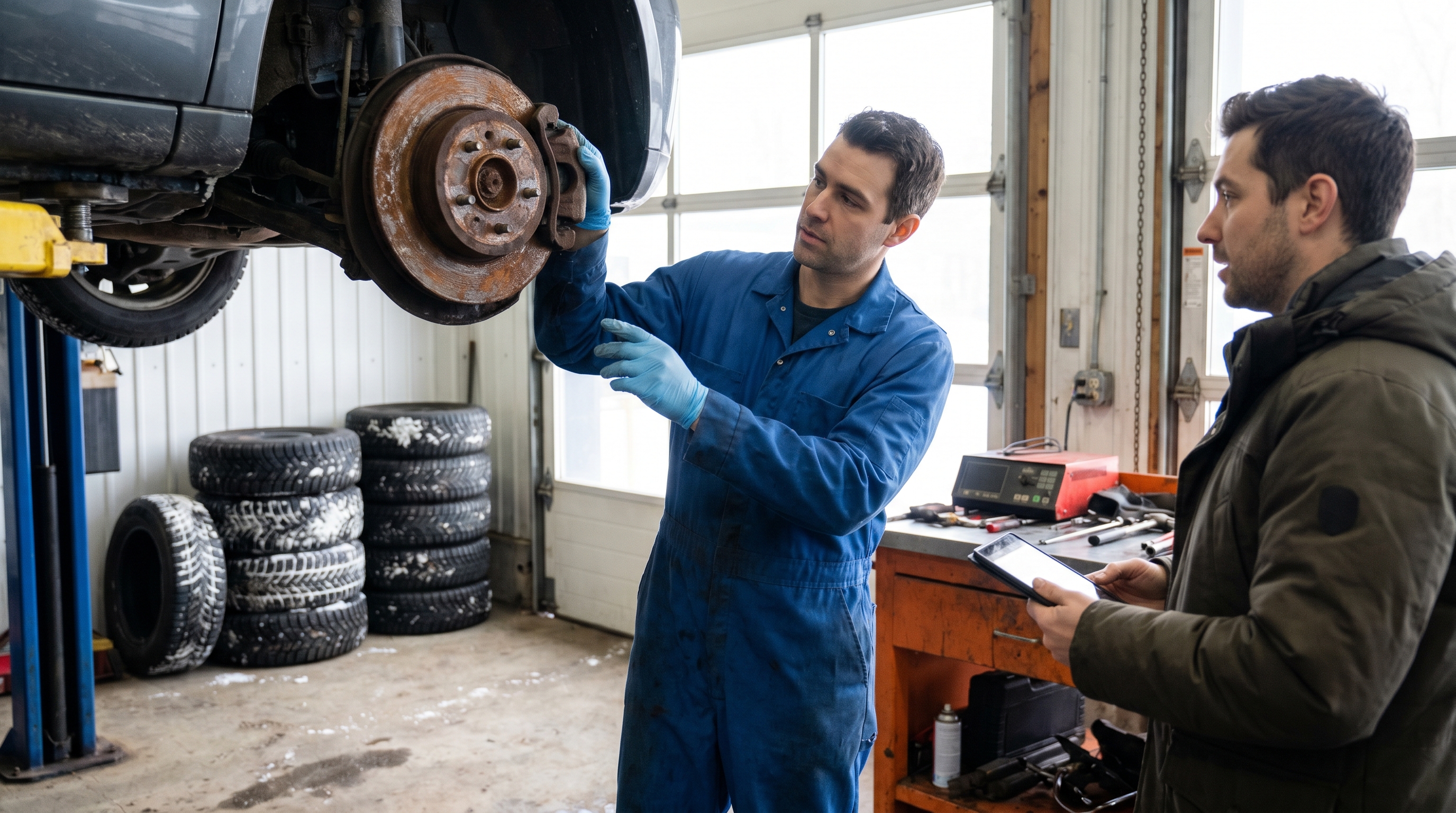
Direct Answer: How Road Salt Affects Your Brakes
Road salt and calcium chloride used on Canadian winter roads drastically accelerate brake corrosion. This leads to seized brake calipers, rusted rotors, and compromised pedal feel. If you drive in Canada, you should inspect your braking system every spring after the snow melts, and again in the fall before winter begins. If you hear grinding noises, feel your vehicle pull to one side when braking, or notice a soft brake pedal, stop driving and schedule a brake service immediately. Delaying service when these symptoms appear can lead to total brake failure.
This guide explains the specific mechanisms of road salt damage, how to diagnose symptoms, and when to seek professional help for brake repair in Canada. For our readers in Quebec, this aligns with general mechanical safety required by the SAAQ, though specific regulatory inspection triggers depend on your vehicle’s status and age. (For context on related seasonal maintenance, drivers often search for entretien des freins au Canada sel de voirie when looking for French-language resources).
How Canadian Road Salt Destroys Brake Components
When municipalities spread salt and brine on icy roads, it splashes into your wheel wells and coats your brake rotors, calipers, and pads. The moisture and chemical reaction create an ideal environment for rust.
Seized Brake Calipers
Calipers rely on sliding pins and rubber boots to clamp the brake pads against the rotor. Road salt breaches these rubber boots, washes away lubrication, and causes the metal pins to rust. When a caliper seizes, it either fails to apply the brake (causing pulling and extended stopping distances) or fails to release (causing a burning smell, excessive heat, and premature pad wear).
Rusted Rotors and Surface Pitting
Rotors are bare cast iron. While a thin layer of surface rust is normal after a rainstorm or a car wash, the persistent salt exposure during a Canadian winter causes deep pitting. Deeply pitted rotors cannot dissipate heat properly and will destroy new brake pads within months.
Pad Delamination
Brake pads are made of friction material bonded to a metal backing plate. Corrosion from road salt attacks this bond, causing the friction material to separate from the plate. This results in sudden, complete loss of braking power on that specific wheel.
Diagnosing Brake Symptoms: A Decision Rule Checklist
Do not guess when it comes to brakes. Use this decision rule checklist to determine your next steps:
- Visual Check: Can you see heavy rust scaling on the rotors through the wheel spokes?
- Action: Schedule a standard inspection. Surface rust is normal; thick, flaky scaling is not.
- Noise Check: Do you hear squeaking, squealing, or a deep metallic grinding when you apply the brakes?
- Action: Squeaking might be moisture or early wear. Grinding means metal-on-metal contact. Schedule urgent service immediately.
- Pedal Feel: Does the brake pedal feel spongy, or does it sink slowly to the floor when held at a stop?
- Action: This indicates air in the lines or a failing master cylinder. Stop driving the vehicle and have it towed to a garage.
- Steering Pull: Does the steering wheel aggressively pull to the left or right when you brake on a straight, flat road?
- Action: You likely have a seized caliper or a collapsed brake hose. Schedule immediate repair.
Illustrative example: A driver in Ontario parks their car outside for a three-week vacation in March. They return to find the brakes grinding loudly and a strong burning smell during the first drive. The road salt and sludge splashed up during their last drive dried and hardened, causing the front left caliper to seize completely to the rusted rotor. The vehicle requires a new caliper, a new rotor, and fresh pads on that axle because the pad was ground down to the metal backing plate.
Failure Modes: Where This Advice Breaks Down
General brake advice is helpful, but specific vehicle technology and extreme conditions change the rules.
- Electronic Parking Brakes (EPB): Many modern vehicles use EPB systems that integrate with the rear calipers. If the rear caliper seizes due to salt, it can trigger dashboard warning lights, put the car into “Limp Mode,” and require a specialized scan tool to retract the pistons before the brakes can even be serviced. Standard DIY advice does not apply here.
- ABS Module Failures: If your Anti-lock Braking System (ABS) warning light is on alongside a soft pedal, the issue is likely electrical or hydraulic in the ABS module, not just standard salt corrosion on the rotors.
- Composite Rotors: Some luxury and electric vehicles use composite or carbon-ceramic rotors that do not rust like cast iron. However, their mounting hubs and adjacent hardware still do.
When a vehicle displays multiple warning lights (ABS, Traction Control, Brake) or enters a restricted driving mode, you must stop guessing. These are complex network faults that require a professional diagnostic scanner to interpret.
How CarZen Helps Canadian Drivers
CarZen operates an automotive maintenance marketplace that connects Canadian drivers with local garages.
- Service Booking: You can use CarZen to find and book brake repair, brake pad replacement, and general mechanical services.
- Market Scope: CarZen serves drivers across Canada, including Quebec, where garages are well-versed in local requirements like those enforced by the SAAQ (Société de l’assurance automobile du Québec).
- Limitations: CarZen is a marketplace platform. We do not perform mechanical repairs, conduct physical inspections, or provide legally binding safety certifications. The platform helps you locate a qualified professional, but the garage is solely responsible for the final mechanical diagnosis and repair work.
What to Ask Your Garage
When you book a brake service related to winter salt damage, ask the mechanic these specific questions:
- “Can I see the old parts?” (Ask them to point out the specific rust damage or seized hardware.)
- “Is the caliper sliding hardware fully cleaned and lubricated with high-temperature synthetic brake grease?” (This prevents future seizing.)
- “Did you check the brake lines for surface corrosion or physical damage?” (Salt eats metal lines, not just rotors.)
- “Does the brake fluid look clear or dark?” (Contaminated fluid should be flushed, not just topped up.)
By understanding how Canadian winters impact your vehicle, you can make informed decisions and ensure your brakes remain reliable year-round.
Frequently asked questions
Does road salt ruin brakes?
Yes. Road salt and calcium chloride cause bare metal components like cast iron rotors and caliper sliding pins to rust rapidly. This leads to deep rotor pitting, seized calipers, and premature brake pad failure.
How often should I check my brakes in Canada?
You should have your brakes physically inspected at least twice a year: once in the spring to assess winter damage, and once in the fall to ensure they are safe for winter driving.
Why does my brake pedal feel soft after winter?
A soft or spongy brake pedal often indicates air in the brake lines, a failing master cylinder, or a severe fluid leak. It is a critical safety issue that requires immediate professional diagnosis and repair.
What is a fair price for brake service in Canada?
A fair price varies by region and vehicle. Standard brake pad replacement usually costs between $150 and $400 per axle. If salt has caused rotors or calipers to fail, expect a complete brake job to cost between $400 and $1,200 per axle.
Can I just replace my brake pads if they are squeaking?
It depends on the cause. If the pads are worn down to the wear indicators, replacing them is sufficient. However, if the squeaking is caused by a seized caliper or severely rusted rotor—common after Canadian winters—replacing only the pads will result in immediate damage to the new parts. Always have the entire system inspected.