Car Suspension Noise Over Bumps in Canada: Causes, Urgency, and Inspections
Hearing clunking or squeaking from your suspension after hitting potholes? Learn what causes suspension noise over bumps in Canada and when to visit a garage.
Quick answer
Suspension noise over bumps in Canada typically stems from worn struts, damaged sway bar links, or failing control arm bushings, exacerbated by harsh winter roads and potholes. A clunking or rattling sound warrants a prompt garage inspection to prevent unsafe steering or costly secondary damage to tires and chassis components.
Key facts
- Market
- CA
- Primary Failure Points
- Sway bar links, strut mounts, control arm bushings
- Common Sounds
- Clunking, rattling, squeaking, knocking
- Key Canadian Factor
- Pothole damage from freeze-thaw cycles and road salt
- Diagnostic Action
- Physical visual inspection and pry-bar leverage test
Service boundaries
- CarZen connects drivers with independent garage partners for diagnostics and repairs but does not perform physical vehicle inspections itself.
- Diagnostic conclusions about the exact source of a suspension noise require a physical lift inspection by a certified mechanic.
- CarZen does not guarantee specific repair prices or parts availability, as these vary by individual garage, vehicle make, and model.
- Any regulatory or safety compliance concerns related to provincial mechanical inspections must be verified directly with the performing garage or the SAAQ.
What can change the price
- Suspension repair estimates in Canada generally range from $150 to $800+ per axle, depending on the specific part failing (e.g., a sway bar link is significantly cheaper than a full strut assembly).
- Total costs are driven by parts pricing (OEM vs. aftermarket), local labour rates (typically $100-$160/hour in Canada), and whether related components (like mounts or boots) must be replaced simultaneously.
- Complex front-wheel-drive or independent rear suspension assemblies usually carry higher labour costs than solid rear axles.
Sources and useful pages
Related CarZen services
Why Canadian Roads Cause Suspension Noise After Winter
Canadian drivers are intimately familiar with the spring thaw, which brings a seasonal crop of potholes capable of wreaking havoc on a vehicle’s undercarriage. The recurring freeze-thaw cycles, combined with heavy road salt use, degrade rubber bushings and joints over the winter. If you are hearing a new clunk, rattle, or squeak when driving over bumps, your suspension is protesting the harsh Canadian road conditions.
The direct answer: Suspension noise over bumps almost always indicates a worn or damaged moving component, most commonly sway bar links, strut mounts, or control arm bushings. Ignoring these sounds can lead to accelerated tire wear, poor handling, and costly secondary damage.
Identifying the Noise: What the Sound Tells You
Suspension noises are highly diagnostic. Pinpointing the type of sound, when it happens, and where it seems to come from (front or rear) is the most valuable information you can give a mechanic.
Clunking or Knocking
A metallic clunk or knock over bumps, especially when turning into a driveway or accelerating from a stop, typically points to a loose or worn component. The most common culprits are:
- Sway bar end links: These connect the sway bar to the suspension. If the joints wear out, they rattle and clunk over every imperfection.
- Control arm bushings: These large rubber mounts absorb vibration. When they crack and degrade, the metal control arm shifts and hits the chassis.
Squeaking or Creaking
A persistent squeak over speed bumps often indicates dried out or worn rubber.
- Rubber bushings: Unlubricated or aging rubber bushings will creak as the suspension articulates. While sometimes just an annoyance, severely degraded bushings can eventually tear entirely.
Rattling
A loose, metallic rattling sound usually points to an exhaust heat shield or a loose brake caliper, but in the suspension, a broken coil spring (often caused by winter road salt corroding the steel) can rattle as the pieces shift. This requires immediate garage inspection.
From Minor Annoyance to Urgent Repair: A Decision Rule
Not every squeak means your car is unsafe, but knowing when to stop driving and call a tow truck is critical.
The CarZen Suspension Safety Checklist:
- Is the steering wandering? If the car pulls heavily to one side or the steering feels loose and vague, the suspension can no longer keep the tires planted. This is an urgent repair.
- Do you feel a harsh impact over small bumps? If your car bounces excessively or crashes over minor imperfections, the shock absorbers or struts are likely blown.
- Is the nose diving? If the front end dips drastically when braking, your front struts are compromised, increasing stopping distance.
- Do you see visible damage? If you can see a cracked coil spring or a severely torn rubber bushing through the wheel spokes, park the car until a mechanic can verify its safety.
If you answered yes to any of the above, the noise is symptomatic of a safety-critical failure. Stop driving aggressively and book an inspection immediately.
Illustrative example: A driver in Montreal navigates through a deep pothole in early April. Immediately afterward, a pronounced clunking noise comes from the front right wheel whenever driving over 10 km/h. The car still drives straight, but the clunking is rhythmic. The mechanic finds the sway bar end link was sheared completely in half by the impact, allowing the sway bar to swing freely. While the vehicle was technically drivable, replacing the link immediately restored safe handling and prevented the sway bar from damaging nearby brake lines.
Why Canadian Drivers Are Uniquely Susceptible
The search term bruit de suspension sur bosses au Canada (suspension noise over bumps in Canada) spikes every spring for a reason. The mechanical failure modes are directly tied to the Canadian climate:
- Pothole Impact: The sheer force of hitting a deep pothole can instantly bend suspension components or snap sway bar links.
- Salt Degradation: Road salt accelerates the rusting of coil springs and the perishing of rubber bushings, making them brittle and prone to sudden failure.
- Temperature Extremes: Rubber parts expand in the summer heat and contract in the sub-zero winter, speeding up the formation of cracks.
Where This Advice Breaks: Failure Modes and Exceptions
Diagnosing car noises by sound alone is inherently uncertain. This is where general advice stops and a physical garage diagnosis becomes mandatory.
Failure Mode 1: Misinterpreting the source. Sound travels through the chassis. A failing wheel bearing can mimic a bad strut, producing a rumbling or humming noise that changes with vehicle speed or steering direction.
Failure Mode 2: Hidden secondary damage. A bent strut might be visible, but the impact that bent it could have also damaged the steering knuckle or subframe. A visual inspection from the ground is insufficient to rule out all safety concerns.
Failure Mode 3: Brake system overlap. A rattling sound over bumps can sometimes be a seized brake caliper sliding on its pins. If the brakes feel spongy or the car pulls to one side when braking, the issue is braking, not just suspension.
Exception: Vehicles equipped with modern adaptive or air suspensions (common on luxury SUVs) will trigger dashboard warning lights for suspension failures. Do not ignore these electronic warnings; they often indicate an air leak or an electronic damper failure that requires specialized diagnostic tools, not just standard mechanical replacement.
What a Garage Should Inspect
When you bring your vehicle into a CarZen-affiliated garage for suspension noise, a proper diagnostic routine should include:
- Road Test: The mechanic will drive the car to replicate the noise and observe handling characteristics.
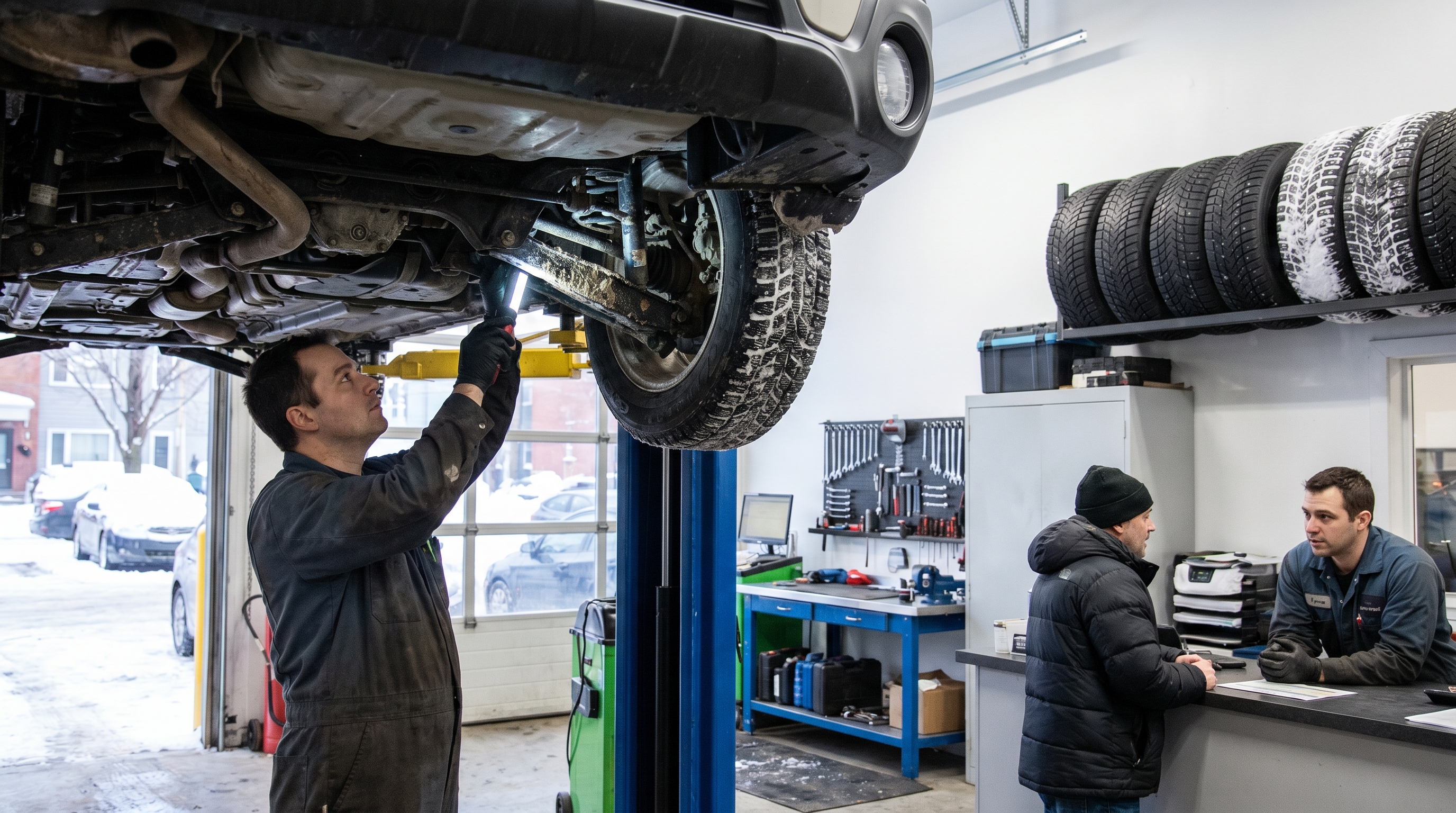
- Visual Inspection on a Hoist: Looking for obvious fluid leaks from shock absorbers, cracked coil springs, and severely torn rubber bushings.
- Pry-Bar Leverage Test: Using a pry bar to put pressure on suspension joints to check for excessive play or movement in control arms, tie rods, and sway bar links.
- Steering Linkage Check: Verifying that the noise is not coming from the steering rack or tie rod ends, which share workload with the front suspension.
What CarZen Helps With
CarZen simplifies the process of managing car repairs and maintenance. Through the CarZen marketplace, Canadian drivers can compare quotes from independent local garages specifically for suspension and steering repairs.
CarZen’s platform provides:
- Access to a network of garages for visual inspections and physical diagnostics.
- Pricing estimates for standard repairs (though final quotes always depend on the specific vehicle make and garage labour rates).
- Service coordination for related seasonal needs, such as spring tire changes where general suspension health can also be visually verified.
Please note: CarZen does not replace the mechanical expertise of a certified technician. A garage must confirm all diagnoses and ensure the vehicle meets all provincial safety standards. CarZen acts as the connection point between drivers and the automotive service industry.
Frequently asked questions
Is it safe to drive with a clunking noise over bumps?
It depends on the cause. If the clunking is accompanied by loose steering, the car pulling to one side, or excessive bouncing, it is not safe to drive and requires immediate attention. If the car handles perfectly normally, it may be a minor wear item, but you should still have it inspected to prevent further damage.
Why does my car make a squeaking noise when going over speed bumps?
A squeaking noise is usually caused by dried out or worn rubber bushings in the control arms or sway bar. As the suspension compresses over a speed bump, the rubber flexes and creaks. A mechanic can lubricate these points or replace the worn bushings if they are cracked.
How much does it cost to fix suspension noise in Canada?
The cost varies widely based on the failed part. Replacing sway bar links might cost $150 to $300, whereas replacing struts or control arms can range from $400 to over $1000 per axle. The final price depends on parts availability, whether you choose OEM or aftermarket, and the specific garage's labour rate.
Can winter potholes permanently damage suspension?
Yes. Hitting a pothole at speed can permanently bend suspension components (like control arms or struts), break coil springs, or shear off sway bar end links. Even if the damage seems minor, it can throw off the vehicle's alignment and cause rapid tire wear.
Do I need an alignment after replacing suspension parts?
In most cases, yes. Replacing major suspension components like struts, control arms, or tie rods alters the geometry of the wheels. A four-wheel alignment ensures the tires are correctly angled to the road, preventing uneven wear and ensuring safe handling.