How to Check Vehicle Recalls in Canada: VIN Lookup, Transport Canada, and What Your Garage Can Fix
Learn how to check active vehicle recalls in Canada using your VIN via Transport Canada. Understand what garages can fix and what requires a dealership.
Quick answer
To check for active vehicle recalls in Canada, locate your 17-character Vehicle Identification Number (VIN) and enter it into the Transport Canada Recall Search database or your vehicle manufacturer's owner portal. Safety recalls are generally repaired free of charge by authorized dealerships.
Key facts
- Market
- Canada (CA)
- Primary Lookup Tool
- Transport Canada Recalls Database
- Required Identifier
- 17-character VIN
- Recall Repair Cost
- Free for active manufacturer safety recalls
- Search Alternative
- Manufacturer owner portals and apps
Service boundaries
- CarZen provides educational content on automotive maintenance and connects drivers with independent garages for general repairs and maintenance.
- CarZen platforms and partner garages cannot perform software updates, flash vehicle ECUs, or replace airbag modules specified under manufacturer safety recalls.
- Completing a recall repair and clearing official recall status must be handled and verified by an authorized dealership or the vehicle manufacturer directly.
What can change the price
- Safety recall repairs performed at authorized dealerships are covered at no cost to the vehicle owner.
- If an independent garage identifies a recalled component during a routine service (like a brake inspection), the vehicle must still be taken to a dealership for the actual recall repair. You will only pay the independent garage for their diagnostic or inspection time, not the repair itself.
- Drivers may incur indirect costs such as towing the vehicle to a dealership if the recall involves a critical safety defect that makes the car unsafe to drive.
Sources and useful pages
Related CarZen services
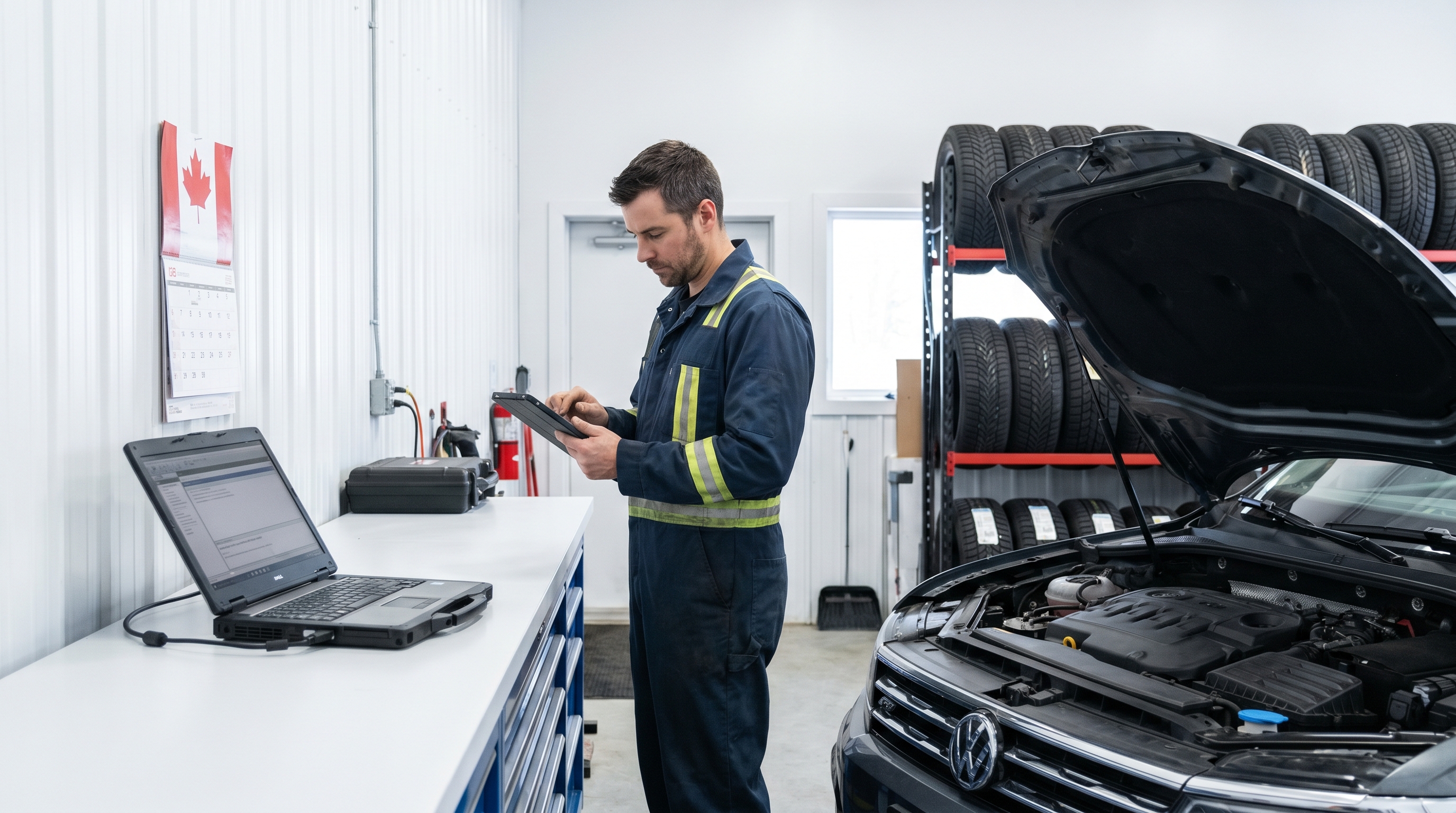
How to Check Vehicle Recalls in Canada Using Your VIN
To check if your vehicle has an active safety recall in Canada, find your 17-character Vehicle Identification Number (VIN) and search it using the Transport Canada online recalls database or your manufacturer’s official owner portal. In Canada, manufacturers are legally required to fix active safety recalls free of charge, though these repairs typically must be performed at an authorized dealership rather than an independent garage.
This guide outlines the step-by-step process for Canadians to verify recall status, what information you need, and the boundaries of what independent garages can do when a recall is identified. Whether you drive a domestic truck or an imported sedan, recall compliance is a critical part of vehicle safety. For multilingual drivers searching for “comment verifier les rappels de vehicules au Canada,” the official Transport Canada tools remain the most reliable national source.
Step-by-Step Guide to Checking Recalls via Transport Canada
Transport Canada is the federal authority responsible for monitoring and recording vehicle safety recalls. To get the most accurate information, you need to bypass generic web searches and use the official government database directly.
Step 1: Locate Your Vehicle Identification Number (VIN)
Your VIN is a unique 17-character code assigned to your vehicle. You can find it in three primary places:
- The base of the driver’s side windshield (viewable from outside the car)
- A label on the driver’s side door jamb
- Your vehicle registration, insurance documents, or purchase paperwork
Do not rely on memory or generic vehicle models when searching for recalls. A VIN identifies the exact manufacturing batch, engine type, and assembly plant, which determines if your specific unit is affected.
Step 2: Search the Transport Canada Recalls Database
Navigate to the official Transport Canada Motor Vehicle Safety Recalls webpage. Enter your 17-character VIN into the designated search field. The database will instantly return any active, unresolved safety recalls specific to your vehicle.
You can also search by vehicle make, model, and year if you are conducting preliminary research before buying a used car, though a VIN search is the only way to guarantee a specific vehicle’s status.
Step 3: Check Manufacturer Owner Portals
Most major vehicle manufacturers (such as Ford, Toyota, Honda, and General Motors) maintain owner portals on their Canadian websites. By creating a free account and registering your VIN, you gain access to a personalized dashboard.
These portals often provide faster updates regarding software updates or service campaigns that may not yet appear in the federal database. They also allow you to book recall appointments directly with local authorized dealerships.
Illustrative example: Checking a recall before a winter tire swap
Imagine you own a 2020 compact SUV and are booking an appointment through CarZen for a seasonal tire change. While reviewing your vehicle paperwork to confirm wheel sizing, you notice a recent news article about brake fluid leaks in your vehicle’s generation. Before taking the car to an independent garage for the tires, you grab your registration, type the 17-digit VIN into the Transport Canada portal, and discover an active recall for the master brake cylinder. Because you checked proactively, you can schedule the free recall repair at the dealership first, ensuring the car is entirely safe before swapping to winter tires at a local garage.
What Garages Can and Cannot Handle for Recalls
A common point of confusion for drivers is where recall repairs can be completed. The answer depends heavily on the type of repair required and the garage’s relationship with the manufacturer.
Dealership vs. Independent Garages
Authorized dealerships are contracted and compensated directly by vehicle manufacturers to perform recall repairs. If a recall involves replacing a faulty airbag, updating engine management software, or reinforcing a suspension component, this work must go to a dealership.
Independent garages—including those found through the CarZen marketplace—cannot perform warranty or recall work covered by the manufacturer. They do not have access to proprietary manufacturer software or the specific original equipment manufacturer (OEM) parts required for a federally mandated safety recall.
Where Independent Garages Provide Support
While independent garages cannot resolve the actual recall, they are highly valuable for the surrounding safety and maintenance ecosystem:
- Pre-recall inspections: A mechanic can identify symptoms of a potential recall (e.g., unusual brake pedal feel or electrical glitches) and advise you to check your VIN.
- Complementary maintenance: If you need an oil change, brake pad replacement, or seasonal tire swap, an independent garage can perform this work. They may advise you to address an open recall first if it directly affects the safety of the service being performed.
- Post-repair verification: After a dealership completes a major recall repair (such as an engine replacement), an independent garage can perform a comprehensive multi-point inspection to ensure everything was reassembled correctly.
Failure Modes: When to Stop Guessing and Call a Professional
Recall checks are generally straightforward, but there are specific failure modes and edge cases where standard guidance breaks down. If you encounter any of the following scenarios, stop guessing and contact a professional or Transport Canada directly.
Imported Vehicles and Gray Market Cars
If your vehicle was originally purchased in the United States or overseas and subsequently imported into Canada, the Transport Canada VIN lookup may not return a complete history. Recalls are often managed regionally. An active safety campaign in the US NHTSA database might not immediately apply to the Canadian registry for that specific VIN. If you imported your vehicle, you must verify recalls in both the country of origin and with Transport Canada.
Modified or Salvage Titles
Vehicles with a salvage or rebuilt title present a unique edge case. If a previous owner attempted to repair recalled components using aftermarket parts rather than OEM parts, the recall status in the federal database may still show as “open.” In these situations, the manufacturer might refuse to honor the free recall repair. You will need a certified mechanic to physically inspect the relevant components to determine if they meet factory specifications.
Software Recalls and Telematics
Modern vehicles frequently receive over-the-air (OTA) software updates. Occasionally, an OTA update is classified as a safety recall. If your vehicle has poor cellular connectivity, or if you have disabled telematics systems, your car might fail to download the update. A VIN check will still show the recall as active. Resolving this requires connecting the vehicle to the manufacturer’s diagnostic network, a service only available at authorized dealerships.
Practical Decision Checklist for Canadian Drivers
Use this checklist to systematically manage vehicle recalls alongside your regular automotive maintenance:
- [ ] Locate your VIN: Find the 17-digit number on your registration or driver’s side windshield.
- [ ] Search Transport Canada: Run your VIN through the federal recall database.
- [ ] Register with the Manufacturer: Create an account on your vehicle brand’s Canadian owner portal.
- [ ] Check Before Major Services: Always verify recall status before paying for major repairs out of pocket; the issue might be covered.
- [ ] Contact Dealership for Open Recalls: Call an authorized dealership to schedule a no-cost repair if an active recall is found.
- [ ] Use CarZen for Maintenance: Book routine maintenance like oil changes, brake repairs, and seasonal tire swaps through CarZen to keep your vehicle safe between dealership visits.
How CarZen Helps with Vehicle Maintenance and Safety
CarZen is an automotive maintenance marketplace designed to help Canadian drivers find trusted independent garages for everyday vehicle servicing, routine maintenance, and seasonal repairs.
While CarZen connects you with qualified mechanics for general repairs, brake services, and tire installations, CarZen and its partner garages cannot process official manufacturer recalls, perform warranty repairs, or flash proprietary vehicle software.
If you use CarZen to book routine maintenance and an independent mechanic identifies an issue that resembles an active recall, they will advise you to verify your VIN with Transport Canada. Once the authorized dealership completes the recall repair, you can confidently return to the CarZen marketplace for ongoing routine maintenance and general repairs.
Frequently Asked Questions
Is it free to fix a recalled vehicle in Canada?
Yes. If a vehicle manufacturer issues a safety recall, they are legally required to repair or replace the defective component at no cost to the vehicle owner. This repair must typically be performed at an authorized dealership.
How long does a recall repair take?
The time required varies significantly depending on the repair. A simple software update might take less than an hour, while replacing a transmission or wiring harness could require the vehicle to remain at the dealership for several days. The dealership can provide an accurate time estimate when you book the appointment.
Do I have to return to the dealership where I bought the car for a recall?
No. You can take your vehicle to any authorized dealership for your specific vehicle brand in Canada. Dealerships are reimbursed by the manufacturer for recall work, so they are generally willing to book these appointments regardless of where the car was originally purchased.
What if I already paid to fix a problem that was later recalled?
If you paid an independent mechanic or a dealership to repair a specific issue before an official recall was announced, you may be eligible for reimbursement from the manufacturer. You will need to submit your repair invoices directly to the vehicle manufacturer’s customer service department for review. The manufacturer will outline the specific eligibility criteria and required documentation.
Do recalls expire in Canada?
Safety recalls do not have a strict expiration date for the current registered owner. However, manufacturers are typically only obligated to perform the repair for the original owner or for a specific number of years after the vehicle was first sold. If you own an older used vehicle, you should check with Transport Canada and the manufacturer to confirm if the recall service is still being honored.
Frequently asked questions
Is it free to fix a recalled vehicle in Canada?
Yes. Manufacturers are legally required to repair or replace defective components outlined in a safety recall at no cost to the owner. This is typically handled by authorized dealerships.
How long does a recall repair take?
It varies by the defect. A software update may take under an hour, while major component replacements (like an engine or transmission) can require the vehicle to stay at the dealership for several days.
Do I have to return to the selling dealership for recall work?
No. You can take your vehicle to any authorized dealership for your specific vehicle brand. Manufacturers compensate all their authorized dealers for performing recall repairs.
What if I already paid to fix a recalled issue?
If you paid for a repair before an official recall was announced, you may qualify for reimbursement. You must submit your original repair invoices directly to the manufacturer's customer service department for evaluation.
Do vehicle recalls expire in Canada?
Strict expiration dates are rare, but manufacturer obligations may be limited to a certain number of years from the original sale date. Always verify with Transport Canada or the manufacturer to confirm eligibility for an older vehicle.