How to Store Tires in Canada: Seasonal Guide for Homes, Condos, and Garage Services
Learn how to store seasonal tires in Canada correctly. This practical guide covers cleaning, stacking, temperature, and storage services for Canadian drivers.
Quick answer
To store tires in Canada, clean them thoroughly, let them dry, and keep them in a cool, dry, and dark space. Store unmounted tires upright and stacked mounted tires horizontally. Avoid outdoor temperature extremes and direct UV sunlight to prevent rubber degradation.
Key facts
- Market
- CA
- Storage Temperature
- Above freezing, ideally between 5°C and 25°C
- UV Exposure
- Keep tires away from direct sunlight to prevent dry rot
- Mounted Stacking
- Stack horizontally up to 4 tires high
- Unmounted Storing
- Store standing upright on the tread
- Storage Prep
- Tires must be completely dry before bagging or storing
Service boundaries
- CarZen connects drivers with independent garages for seasonal tire changeovers, physical inspections, and storage referrals.
- Specific tire storage facility availability, monthly rates, and condo board rules must be verified directly with the service provider or property management.
- CarZen does not physically store tires, guarantee facility climate conditions, or regulate residential property bylaws.
What can change the price
- Professional tire storage costs generally depend on geographic location (urban centers like Montreal or Toronto typically cost more), the number of tires (standard vs. oversized truck/SUV tires), and whether the tires are mounted on rims.
- Additional fees often apply for off-site pickup and delivery services.
- Climate-controlled facility storage commands a premium over standard warehouse or unheated garage storage.
Sources and useful pages
Related CarZen services
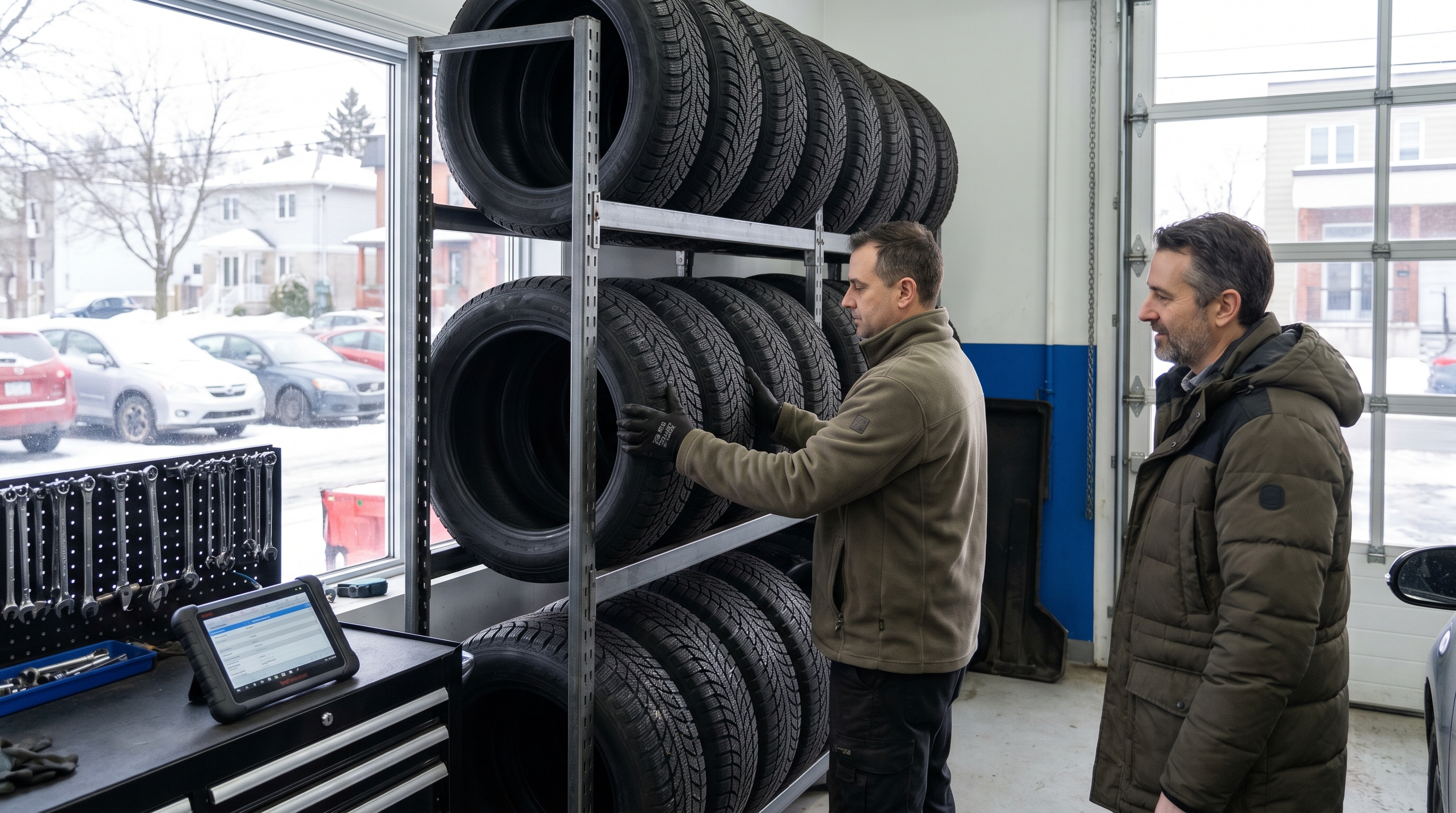
Direct Answer: How to Store Tires in Canada
To store seasonal tires in Canada, clean them thoroughly, let them dry completely, and keep them in a cool, dry, and dark indoor environment. Store unmounted tires upright, and stack mounted tires horizontally. Avoid outdoor temperature extremes and direct UV sunlight to prevent premature rubber degradation.
Market Scope and Canadian Context
This guide applies to passenger vehicles and light trucks operating within the Canadian market. In provinces with mandatory winter tire laws, such as Quebec, drivers manage two distinct sets of tires annually. Proper off-season storage is critical to maximizing tire lifespan and ensuring safety. This advice applies whether you are storing winter tires during the summer or all-season tires during the winter.
Decision Rules: Tire Storage Preparation Checklist
Before putting your tires away for the season, follow this practical checklist to prevent damage:
- Wash and scrub: Remove road salt, brake dust, and grime using mild soap and water. Road salt is highly corrosive and can degrade rubber and metal rims over time.
- Dry completely: Towel dry the tires and let them sit in a well-ventilated area until all moisture evaporates. Trapped moisture inside a storage bag causes dry rot or rim rust.
- Inflate to standard pressure: If storing tires mounted on rims, inflate them to the manufacturer’s recommended PSI to prevent bead sealing issues or flat spots.
- Label clearly: Mark the tire’s position on the vehicle (e.g., Front Left, Rear Right) and note the tread depth. This helps with tire rotation at your next seasonal changeover.
Mechanisms of Tire Degradation: Sunlight, Temperature, and Position
Tires degrade through three primary mechanisms when stored improperly: ultraviolet (UV) radiation, ozone exposure, and physical deformation.
Sunlight and UV Exposure
UV rays break down the chemical bonds in rubber, leading to dry rot, cracking, and discoloration. Always store tires away from windows or use opaque, purpose-built tire storage bags.
Temperature Extremes
Tires should be kept in a climate above freezing but away from high heat. The ideal storage temperature is between 5°C and 25°C. Avoid placing tires near furnaces, hot water tanks, or electric heaters. Wide temperature swings cause the rubber to expand and contract, accelerating wear.
Position and Stacking
How you store a tire depends on whether it is mounted on a rim:
- Unmounted tires (rubber only): Store them standing upright on their tread. Stacking unmounted tires causes the bottom tire to deform under the weight.
- Mounted tires (tires on rims): Stack them horizontally, up to four tires high. Stacking mounted tires prevents stress on the lower sidewalls.
Illustrative example:
Consider a driver living in a downtown Montreal condo who places their unmounted winter tires in clear plastic garbage bags on their glass-enclosed balcony during the summer. Throughout the season, the greenhouse effect causes extreme temperature swings, and direct sunlight bakes the tires through the clear plastic. By fall, the sidewalls show visible micro-cracking (dry rot), rendering the tires unsafe for highway driving. The driver must now replace a set of tires that otherwise had plenty of tread left.
Storage Tradeoffs: Homes, Condos, and Professional Services
Home Garages and Sheds
A detached garage or garden shed is the most common storage solution. Ensure the space does not leak, is free from petroleum fumes (which degrade rubber), and is shielded from direct sunlight. A dedicated tire rack mounted on a wall is the safest spatial configuration.
Condos and Apartments
Many Canadian condominiums prohibit tire storage in underground parking garages due to fire codes, spatial constraints, and pest control policies. Check your building’s specific bylaws before moving tires into your assigned parking spot or storage locker. If balcony storage is your only option, you must use thick, UV-resistant, opaque covers and understand that outdoor temperature extremes will still reduce the tire’s lifespan.
Professional Garage Storage Services
Numerous garages and specialized tire depots across Canada offer seasonal storage. This is a practical solution for drivers lacking physical space.
Variables that change professional storage quotes:
- Tire type: Standard passenger tires cost less to store than oversized truck or low-profile sports tires.
- Mounting status: Tires already mounted on rims take up more volume, sometimes affecting the price.
- Location: Urban centers typically have higher monthly rates than rural areas.
- Logistics: Services that include picking up your tires from your home and delivering them in the fall will cost significantly more than a standard drop-off.
Failure Modes: When This Advice Breaks
General storage guidelines stop being reliable under the following conditions:
- Pre-existing sidewall damage: If a tire has a bulge, deep cut, or severe blistering, storage will not halt its structural failure. Do not store damaged tires; dispose of them responsibly.
- Extreme flat spotting: If a vehicle sat stationary on its tires for over a year, the tires may have developed permanent flat spots. A garage must assess if they can be safely rehabilitated.
- Internal belt separation: Impact damage from potholes can cause internal belt separation, which is invisible from the outside. A tire with this condition can degrade unpredictably in storage.
When to Stop Guessing and Call a Garage
Transition from DIY storage evaluation to professional help when you notice:
- Visible steel belts poking through the tread.
- Persistent vibrations despite tire balancing during a recent changeover.
- A constant, slow air leak that requires weekly top-ups.
How CarZen Helps Canadian Drivers
CarZen connects drivers with independent, certified garages for seasonal tire changeovers, physical inspections, and mechanical repairs. If your tires show signs of degradation, or if you need a professional changeover before storing your vehicle’s off-season rubber, you can use the CarZen marketplace to find local services, compare quotes, and book an appointment. CarZen does not own storage warehouses or regulate facility climates; drivers must confirm specific storage terms, facility security, and condo bylaws directly with the service provider or property management.
Practical FAQ
Is it better to store tires in plastic bags? Yes, as long as the tires are completely dry before bagging. Opaque, airtight tire totes prevent dust accumulation and limit ozone exposure while blocking UV light.
Can I leave my tires outside in the Canadian winter? It is highly discouraged. Freezing temperatures, ice, and direct winter sunlight will rapidly accelerate rubber degradation and cracking.
Do I need to reduce tire air pressure for long-term storage? No. Maintain the standard operating air pressure. Deflating tires can cause improper bead seating or allow the sidewall to collapse and deform under weight.
How long can tires be safely stored? If kept in a cool, dark, and dry environment, tires can be stored safely for several years. However, rubber compounds naturally age. Most manufacturers recommend replacing tires that are over 10 years old from their date of manufacture, regardless of tread depth or storage conditions.
What does tire sidewall dry rot look like? Dry rot appears as small, visible cracks or fissures in the rubber along the sidewall and tread blocks. Tires showing signs of dry rot should be inspected by a mechanic, as the structural integrity of the tire is compromised.
Frequently asked questions
How should I store unmounted tires without rims?
Store unmounted tires standing upright on their tread, not stacked horizontally. Stacking unmounted tires distorts the bottom tire under the weight.
What temperature is too cold for tire storage?
Tires should ideally be stored above freezing, between 5°C and 25°C. Extreme cold can cause the rubber compounds to become brittle and degrade prematurely.
Why do tires need to be cleaned before storage?
Washing tires removes corrosive elements like road salt, grime, and brake dust. If left on the tire during storage, these elements can break down the rubber and cause rust on metal rims.
Can I store tires on my apartment balcony?
It is highly discouraged due to extreme temperature swings and UV exposure. If you absolutely must, use thick, opaque, UV-resistant covers, but expect a reduced lifespan for the tires.