How to Winterize Your Car in Canada: National Checklist
Learn how to winterize your car in Canada. This national checklist covers battery, brakes, winter tires, fluids, wipers, lights, and emergency kits for safe...
Quick answer
To winterize a car in Canada, install a matching set of winter tires, test the battery's cold cranking amps, top up winter-grade fluids, verify brake health, replace worn wipers, confirm all lights function, and pack a cold-weather emergency kit before the first frost or snowfall.
Key facts
- Market
- Canada-wide (CA)
- Primary regulatory scope
- Federal and Provincial Highway Traffic Acts
- Core systems covered
- Tires, battery, fluids, brakes, wipers, lights, safety kit
- Optimal timing
- Before temperatures consistently drop below 7°C
- Uncertainty factors
- Vehicle model, regional regulations, garage diagnosis
Service boundaries
- CarZen connects drivers with independent garage partners across Canada for winter maintenance services like tire changes, brake inspections, and fluid top-ups.
- Diagnostic data, regulatory compliance status, and physical installation are performed by certified mechanics, not by CarZen.
- CarZen cannot verify if a specific vehicle meets local provincial inspection standards without a formal garage diagnosis.
What can change the price
- Winter tire installation and balancing typically ranges from $60 to $120 per season, but varies by vehicle type (sedan vs. truck), tire size (rim diameter), and local labour rates.
- A seasonal multi-point inspection generally costs between $100 and $200, depending on whether it includes synthetic oil changes or specialized fluid flushes.
- Battery testing is often complimentary with installation, but a new AGM or lead-acid battery usually costs between $150 and $300, influenced by required Cold Cranking Amps (CCA) and warranty length.
Sources and useful pages
Related CarZen services
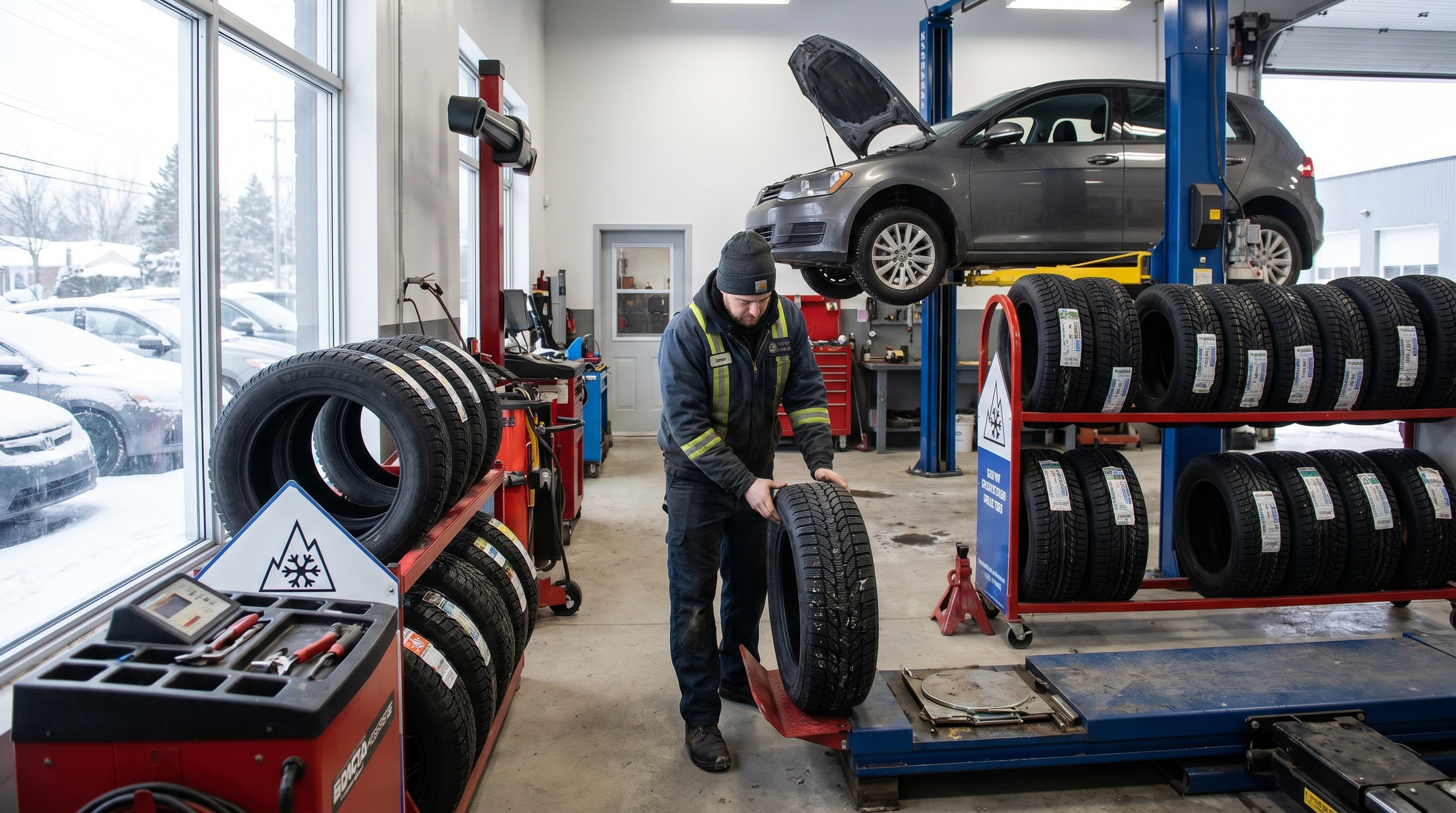
How to Winterize Your Car in Canada
To safely winterize your car in Canada, you must install a matching set of winter tires, test the battery’s cold cranking amps, top up winter-grade windshield washer fluid, verify brake pad and rotor health, replace worn wiper blades, confirm all exterior lights function, and pack a cold-weather emergency kit. Complete these steps before the first hard frost or significant snowfall, as waiting until roads are icy increases collision risks and overwhelms local service garages.
Quick Decision Rule for Winterization Timing
Schedule your winter maintenance when ambient temperatures consistently drop below 7°C. At this temperature, all-season rubber compounds begin to harden, significantly reducing traction. Planning your garage appointment in early to mid-October avoids the November rush and ensures your vehicle is prepared for sudden early snowstorms, regardless of your province.
Canada-Wide Winterization Checklist
This checklist applies to drivers across all Canadian provinces and territories. While specific legal mandates (like Quebec’s mandatory winter tire law) vary regionally, the mechanical requirements for safe driving in sub-zero temperatures do not.
1. Tires: Your Primary Contact Patch
Action: Install four matching winter tires.
All-season tires are designed for moderate climates and lose elasticity in freezing temperatures. Dedicated winter tires use softer rubber compounds and deeper tread patterns designed to bite into snow and clear slush. Always install a full set of four to maintain predictable handling; mixing winter and all-season tires causes dangerous traction imbalances between the front and rear axles.
Provincial Context: While British Columbia mandates winter tires on designated mountain routes (typically October 1 to March 31), and Quebec legally requires them from December 1 to March 15, safe winter driving everywhere in Canada demands them.
2. Battery Health and Cold Cranking Amps
Action: Test battery capacity and inspect terminals.
Engine oil thickens in the cold, requiring more power to turn the engine over. Simultaneously, a battery’s chemical reaction slows down in low temperatures. Have a mechanic perform a load test to verify the battery can deliver sufficient Cold Cranking Amps (CCA) for your specific engine size. Visually inspect terminals for corrosion, which blocks the electrical current, and ensure the battery is securely mounted to prevent vibration damage.
3. Fluids: Antifreeze and Windshield Washer
Action: Test engine coolant and replace summer windshield washer fluid.
Coolant (antifreeze) must be rated for the coldest temperatures your region experiences. A mechanic can test its freezing point to ensure it protects the engine block from cracking. Drain and replace summer windshield washer fluid with a winter-rated formula (usually rated to -40°C). Summer fluid will freeze in the reservoir and lines, cracking the plastic and rendering your wipers useless against road salt spray.
4. Brakes: Pads, Rotors, and Lines
Action: Inspect braking system components.
Stopping distances increase dramatically on snow and ice. Worn brake pads or scored rotors will severely compromise your ability to stop safely. Have a mechanic measure pad thickness and inspect the condition of the rotors. Check for rust on brake lines and ensure the brake fluid is clean, as contaminated fluid absorbs water which can freeze and cause complete brake failure.
5. Wipers and Lights: Visibility
Action: Install winter wiper blades and clean all light housings.
Standard rubber wiper blades become rigid and can tear in freezing temperatures. Winter blades are encased in a protective rubber boot that prevents ice and snow from jamming the hinge mechanism. Replace them if they leave streaks or chatter across the glass. Inspect all headlights, taillights, and turn signals. Clouded plastic headlights can be restored; completely replace any blown bulbs to ensure you can see, and be seen, in low-visibility conditions.
6. Emergency Kit: Safety Net
Action: Assemble or purchase a Canadian winter emergency kit.
Keep the following items in your trunk from November through April:
- Non-perishable high-energy food (granola bars)
- Extra warm clothing, gloves, and a blanket
- First-aid kit
- Small snow shovel and a bag of kitty litter or sand (for traction)
- Jumper cables
- Flashlight with extra batteries
- Ice scraper and snow brush
Practical Examples and Tradeoffs
Illustrative example: A driver in Calgary swaps to winter tires in October but skips the battery test. During a -30°C cold snap in January, the battery fails to crank the engine. The tradeoff of skipping the $0–$20 load test is being stranded and paying for an emergency tow and roadside battery replacement, which costs significantly more than preventative maintenance.
Tradeoff: Buying used winter tires is a common way to save money, but the remaining tread depth and rubber integrity are unknown. A new, budget-friendly winter tire will consistently outperform a heavily worn premium tire. Prioritize tread depth over brand name.
Where This Advice Breaks: Failure Modes
Deep System Failures: If your engine is already misfiring, the check engine light is flashing, or you hear grinding metal when braking, winterization checklists are insufficient. These indicate pre-existing mechanical failures that require immediate garage diagnosis, not seasonal maintenance.
Modern Tech Complexity: Vehicles with advanced driver-assistance systems (ADAS) require camera and sensor recalibration after a windshield or bumper replacement. Do not attempt DIY repairs on these components without consulting a certified mechanic.
Uncertainty: Always ask a garage to verify regulatory compliance. Do not guess if your tire tread depth meets local legal minimums or if your modified vehicle passes provincial safety standards.
How CarZen Helps with Winterization
CarZen is an automotive maintenance marketplace that connects Canadian drivers with independent garage partners across the country. If you need help executing this checklist, you can use CarZen to find local services for winter tire installation, comprehensive brake inspections, fluid flushes, and seasonal multi-point inspections. CarZen provides the platform to book these services easily, but the diagnostic and physical work is performed by independent certified mechanics.
What to Ask a Garage
When booking your winterization appointment, ask the mechanic these specific questions:
- “Can you perform a battery load test and measure the cold cranking amps against my vehicle’s requirements?”
- “What is the remaining life percentage on my brake pads, and are the rotors within spec?”
- “Can you test the freeze point of my engine coolant to confirm it is safe for -40°C temperatures?”
Frequently asked questions
When should I put winter tires on my car in Canada?
Install winter tires when ambient temperatures consistently drop below 7°C. This usually falls between early October and mid-November, depending on your specific region. Do not wait for the first snowfall, as all-season tires lose traction in the cold even on dry pavement.
Is winterizing my car necessary if I drive an AWD vehicle?
Yes. All-Wheel Drive helps you accelerate in slippery conditions, but it does absolutely nothing to help you stop or steer. Winter tires, healthy brakes, and proper fluids are required for safe stopping distances and cornering, regardless of your vehicle's drivetrain.
What is the most important part of winterizing a car?
Installing four matching winter tires is the most critical step. They provide the necessary traction to start, steer, and stop safely in freezing temperatures, snow, and ice. Without them, other safety systems like ABS and traction control cannot function as intended.
Does CarZen offer mobile winter tire installation?
You can use CarZen to connect with independent mobile mechanics and garages across Canada that offer winter tire installation. Availability of mobile tire services depends on your specific location and the equipment required for your vehicle.