Hybrid Vehicle Maintenance in Canada: What Drivers Actually Need to Know
Learn the specific maintenance needs of hybrid vehicles in Canadian conditions, including brake care, 12V battery health, fluids, and winter tire choices.
Quick answer
Hybrid vehicles in Canada need specific maintenance that differs from gas or EV. Regenerative braking reduces brake wear but causes rotor corrosion, requiring regular inspection. The 12V battery is essential for starting, and fluids need climate-adjusted intervals. Winter tires are critical for Canadian conditions.
Key facts
- Market
- CA
- Brake System
- Regenerative braking reduces wear but increases rotor corrosion risk
- 12V Battery
- Essential to start the hybrid system; failure immobilizes the vehicle
- Winter Tires
- Critical for Canadian conditions; consider load and efficiency ratings
Service boundaries
- CarZen connects drivers with garages for inspection, diagnosis, and service. We provide general guidance based on common maintenance practices and Canadian regulatory requirements. A licensed mechanic must perform a physical inspection to confirm the condition of any vehicle component and provide a precise service quote.
- Official sources such as the SAAQ or your vehicle's owner's manual are the final authority on regulatory and manufacturer-specific requirements.
What can change the price
- Any service estimate depends on the vehicle make, model, and year, as well as the garage's labor rate and part sourcing.
- Fluid changes, battery tests, and inspections vary in price; a garage can provide an exact quote based on the specific vehicle and required work.
- Winter tire prices vary by size, brand, and whether wheels are included.
Sources and useful pages
Related CarZen services
Direct Answer: Hybrid Maintenance in Canada
Hybrid vehicles in Canada require a service approach that blends elements from both gas and electric vehicle maintenance, with key differences driven by Canadian climate. Regenerative braking extends pad life but promotes rotor corrosion, requiring vigilance. A small 12V battery is the linchpin of the entire system, and standard fluids require inspection on climate-adjusted intervals. Winter tire selection impacts both safety and efficiency.
This article outlines these specific needs for Canadian drivers comparing gas, hybrid, and EV maintenance profiles. Drivers searching for “entretien d’un vehicule hybride au Canada” will find that the core needs—brakes, batteries, fluids, and tires—are universal, but the Canadian context adds critical variables.
Key Maintenance Needs for Canadian Hybrids
Hybrids combine an internal combustion engine (ICE) with an electric motor and battery pack. This dual system creates unique maintenance requirements.
1. Brake Corrosion and Regenerative Braking
Regenerative braking uses the electric motor to slow the vehicle, converting kinetic energy back into electricity to charge the battery. This significantly reduces wear on traditional brake pads and rotors.
However, in Canada, this creates a specific failure mode. Because the friction brakes are used less often, they are more susceptible to corrosion, especially from road salt and moisture during long winters.
Decision Rule: Do not assume brakes are fine just because the pads are thick. Ask your garage to measure rotor thickness and check for surface rust, pitting, or uneven wear.
2. 12V Battery Health is Critical
Unlike a gas car where the 12V battery primarily starts the engine and runs accessories, a hybrid’s 12V battery is responsible for “booting up” the entire vehicle computer system, which in turn engages the high-voltage battery and starts the engine. If the 12V battery fails, the hybrid is completely immobilized.
Cold Canadian winters are notoriously hard on batteries.
Decision Rule: Test the 12V battery annually, ideally before the cold season. Replace it proactively at the first sign of weakness rather than waiting for a no-start condition.
3. Fluids and Filters
Hybrids still use engine oil, transmission fluid (often specific to hybrids), and coolant (for both the engine and the battery/inverter system).
- Engine Oil: The ICE may run intermittently, leading to condensation and fuel dilution in the oil, especially on short winter trips. Adhere to severe-service intervals.
- Coolant: Hybrid battery packs often have their own cooling system. This fluid has specific requirements and should be checked per the manufacturer’s schedule.
- Transmission Fluid: Hybrid transmissions (e.g., eCVT) have unique fluid needs.
4. Winter Tire Choices for Hybrids
All Canadian drivers should use winter tires, but hybrids have two additional factors to consider: the added weight of the battery pack and the impact on regenerative braking efficiency.
Tires designed for low rolling resistance help maintain fuel economy, but they must also support the vehicle’s weight. Consult your manual for load index requirements.
Hybrid Maintenance Checklist for Canadian Drivers
Use this checklist when booking service or speaking with your mechanic:
- [ ] 12V Battery Test: Load-test annually; replace if weak.
- [ ] Brake Inspection: Inspect rotors for corrosion and pads for material, not just wear.
- [ ] Engine Oil: Follow severe-service intervals, especially for city driving.
- [ ] Coolant Check: Verify level and condition for both engine and hybrid systems.
- [ ] Tire Inspection: Check pressure, tread depth, and winter suitability.
Illustrative Example: Brake Maintenance Scenario
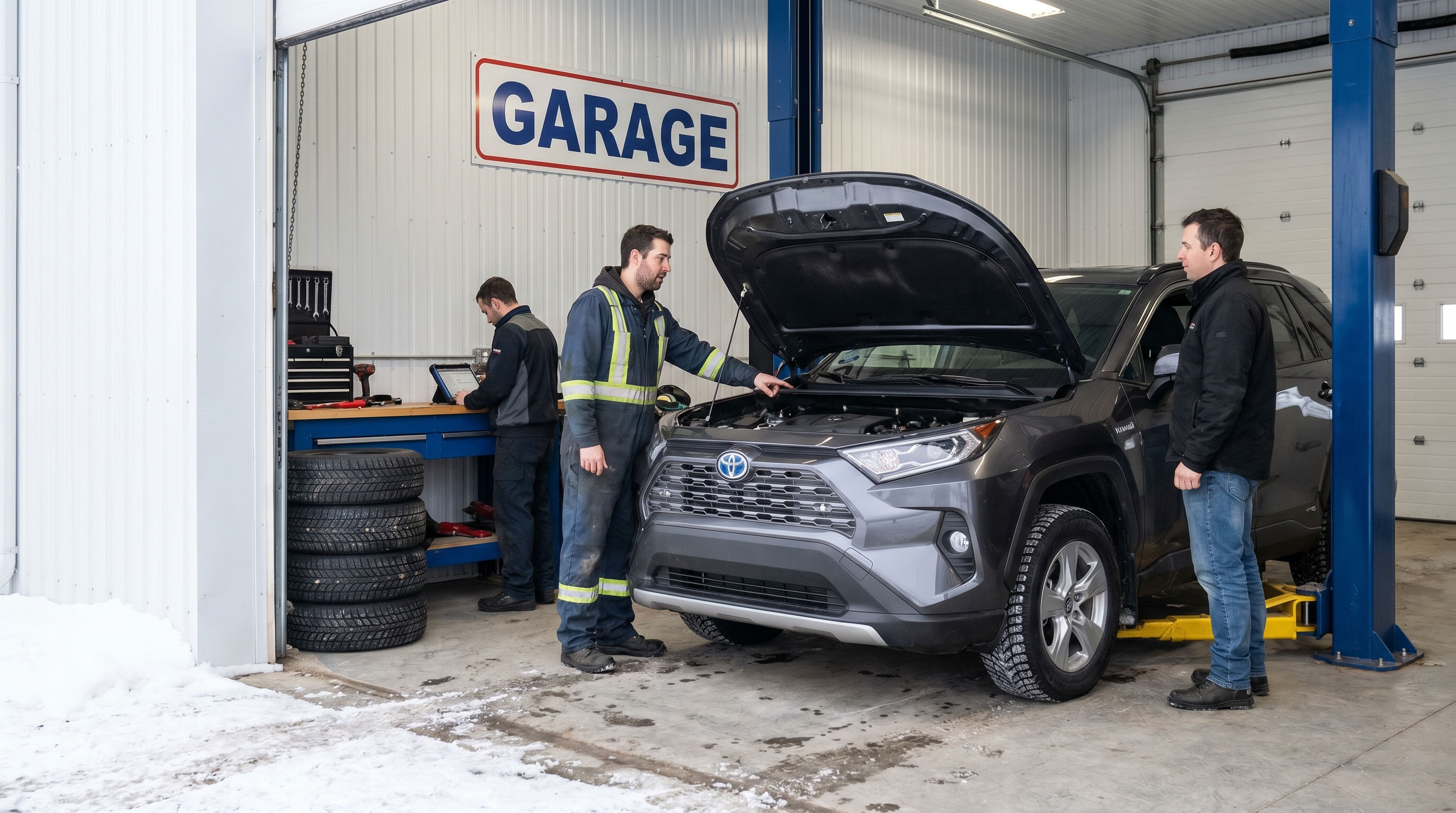
Illustrative example: Consider a 2019 Toyota RAV4 Hybrid driven primarily in Montreal. The owner follows a strict oil change schedule but neglects brake inspections because the pads “never wear down.” In spring, a grinding noise appears. A mechanic finds the rotors have rusted and pitted due to disuse over winter, requiring full rotor and pad replacement despite the pads having 70% life remaining. Regular inspection could have caught the corrosion earlier, potentially allowing for less expensive resurfacing.
Where This Advice Breaks: Failure Modes and Exceptions
This guidance provides a general framework, but it has limits.
- Plug-in Hybrids (PHEVs): PHEVs may have different usage patterns, running on electric power far more often. This can further reduce friction brake use, exacerbating the corrosion issue.
- Model-Specific Nuances: Some hybrids use an electrically-driven A/C compressor, which has different maintenance needs than a belt-driven one. Always consult the owner’s manual.
- High-Voltage Battery Degradation: This article focuses on standard maintenance. High-voltage battery health is a complex topic that requires professional diagnosis if range or performance drops significantly.
When to stop guessing and call a garage: If you notice a change in braking feel (vibration, grabbiness), a slow crank on startup, warning lights on the dash (especially a red or yellow hybrid system warning), or a significant drop in fuel economy, book a diagnostic appointment immediately.
What CarZen Helps With
CarZen is an automotive maintenance marketplace. We help Canadian drivers connect with qualified garages for inspections, routine maintenance, and repairs. You can use CarZen to find a mechanic for your hybrid’s specific needs, including brake services, battery replacement, and seasonal tire changes.
We provide general information to help you make informed decisions. We do not perform mechanical work, provide official safety certifications, or guarantee pricing. For a definitive diagnosis and quote, you must consult directly with a licensed service provider through our platform or otherwise.
FAQ
Q: Is hybrid maintenance more expensive than gas car maintenance? A: It can vary. You may save on brake pads due to regenerative braking, but you might pay more for model-specific fluids or battery service. Overall, it is often comparable but with different cost centers.
Q: How often should I change the oil in my hybrid? A: Follow the “severe service” schedule in your owner’s manual, especially if you drive in Canadian winters or make many short trips where the engine doesn’t fully warm up.
Q: Do I really need to worry about the 12V battery? A: Yes. In a hybrid, the 12V battery is critical for starting the vehicle’s electronic systems. A dead 12V battery will prevent the car from starting, even if the main hybrid battery is fully charged.
Q: Are there special winter tires for hybrids? A: While not “special,” it’s important to choose winter tires that meet your vehicle’s load rating (due to the battery weight) and consider low-rolling-resistance models to help maintain efficiency.
Frequently asked questions
Is hybrid maintenance more expensive than gas car maintenance?
It can vary. You may save on brake pads due to regenerative braking, but you might pay more for model-specific fluids or battery service. Overall, it is often comparable but with different cost centers.
How often should I change the oil in my hybrid?
Follow the "severe service" schedule in your owner's manual, especially if you drive in Canadian winters or make many short trips where the engine doesn't fully warm up.
Do I really need to worry about the 12V battery?
Yes. In a hybrid, the 12V battery is critical for starting the vehicle's electronic systems. A dead 12V battery will prevent the car from starting, even if the main hybrid battery is fully charged.
Are there special winter tires for hybrids?
While not "special," it's important to choose winter tires that meet your vehicle's load rating (due to the battery weight) and consider low-rolling-resistance models to help maintain efficiency.