New York Studded Tire Laws and Winter Tire Regulations: What Drivers Need to Know
A practical guide to New York state studded tire laws and winter tire rules. Learn when studded tires are legal, seasonal limits, and how to prepare for wint...
Quick answer
New York State allows studded tires from October 16 to April 30. Outside this window, studded tires are illegal on public roads. New York does not mandate winter tires, but the state recommends them for safe cold-weather driving. Drivers who use studs must comply with the seasonal dates and ensure tires meet state safety standards.
Key facts
- Market
- US-NY
- Studded tire allowed dates
- October 16 to April 30
- Winter tire mandate
- Not required by New York State
- Regulatory authority
- New York State Department of Motor Vehicles (NYS DMV) and Vehicle and Traffic Law
- Date verified
- 2026-06-09
Service boundaries
- CarZen helps Canadian and US drivers find trusted garages for seasonal tire changes, winter tire installation, and general maintenance through its marketplace.
- CarZen does not provide legal advice or official regulatory interpretations. For enforcement questions, ticket disputes, or current statute language, consult the New York State DMV, local law enforcement, or a licensed attorney.
- Garage availability and pricing shown on CarZen are estimates provided by partner shops and can vary by location, vehicle type, and demand.
- Cross-border travel may subject vehicles to different state or provincial rules. CarZen covers maintenance guidance; always verify destination regulations with official sources before travel.
What can change the price
- Winter tire installation in the New York region typically ranges from $60–$120 per set of four, depending on shop labor rates, vehicle type, and whether wheels are pre-mounted.
- Studded tire purchases in the US generally range from $100–$200+ per tire, influenced by brand, size, stud count, and retailer.
- Seasonal tire changeovers (swap and balance) can range from $40–$100 per set. Prices increase if additional services like alignment or brake inspection are included.
- Mobile tire service may carry a premium call-out fee of $50–$150 on top of standard installation charges, depending on distance and provider.
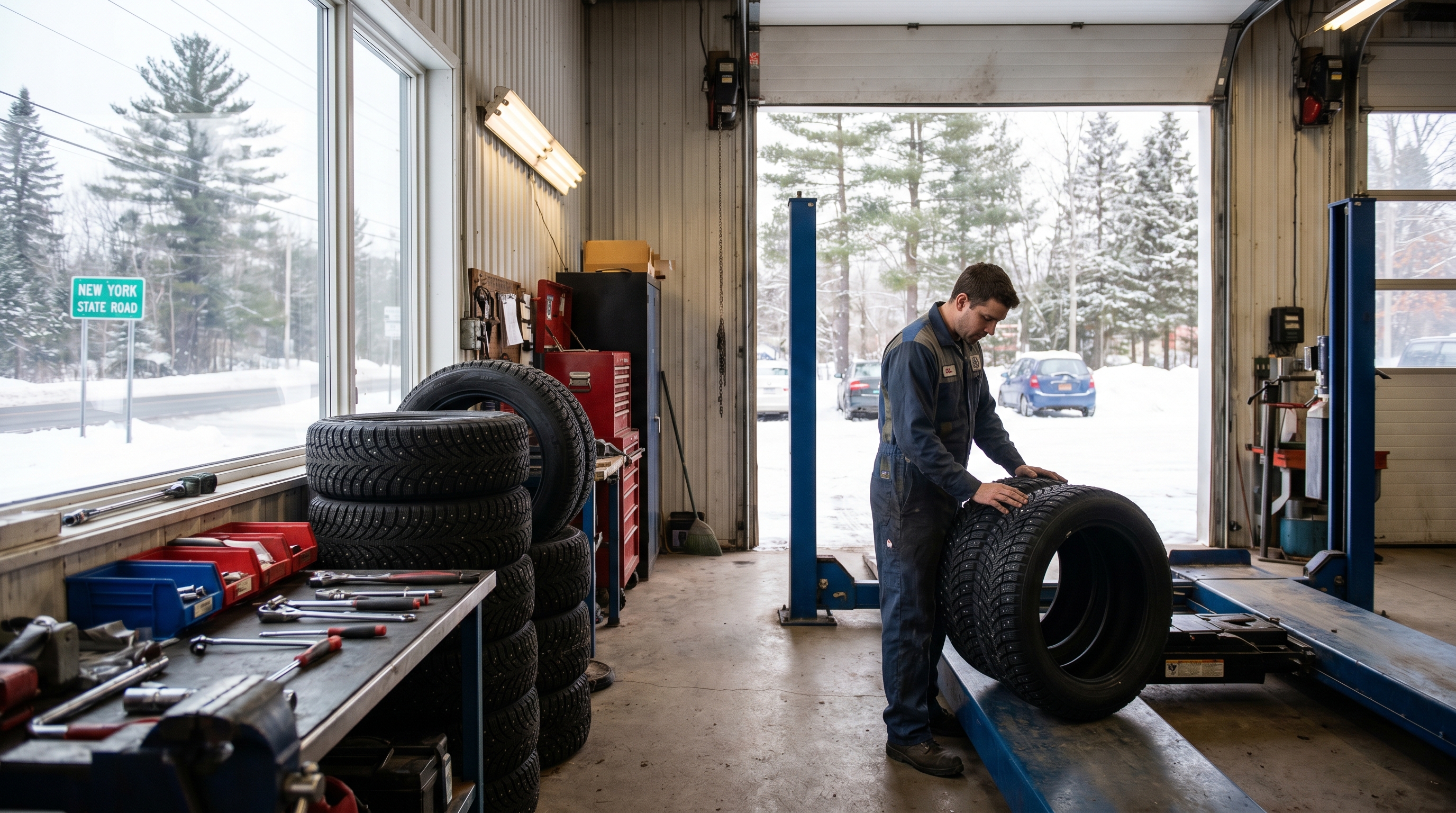
New York Studded Tire Laws and Winter Tire Regulations
New York State permits the use of studded tires on public roads only between October 16 and April 30 each year. Outside of that window, driving with studded tires is a violation. New York does not legally require winter or snow tires, but the state and safety organizations strongly recommend them when temperatures consistently drop below 7 °C (45 °F).
This guide covers the key rules, timing, tradeoffs, and practical steps for drivers who travel through or live in New York during winter.
Key New York State Tire Regulations
Studded Tire Season
- Allowed: October 16 through April 30.
- Prohibited: May 1 through October 15.
- The law applies to all public roads in New York State.
- Enforcement is handled by state and local police; fines and surcharges may apply for out-of-season use.
Winter Tire Requirements
- New York State does not mandate winter tires.
- Adjacent jurisdictions may differ. Vermont, for example, can issue hazardous travel advisories that effectively require chains or adequate snow equipment under certain conditions.
- For Canadian drivers crossing into New York, remember that Quebec’s winter tire mandate (December 1 to March 15) still applies to vehicles registered in Quebec, even when those vehicles are driven in New York.
Chains and Traction Devices
- Tire chains are generally permitted when conditions require them, but some parkways and toll roads restrict their use.
- Always check local advisories before relying on chains in the New York City metro area or on limited-access highways.
Decision Rule: Which Winter Traction Option Is Right for You?
Use this checklist to decide between all-season tires, winter (non-studded) tires, and studded tires for New York driving:
| Situation | Recommended Option | Why | |---|---|---| | Mostly highway and city driving, plowed roads | Winter tires (non-studded) | Better grip on cold pavement, quieter, no seasonal legal restrictions beyond dates | | Frequent driving on packed ice or untreated rural roads | Studded tires (within legal dates) | Superior traction on sheer ice | | Occasional trips to snow belt, otherwise mild routes | All-weather or winter-rated all-season tires | Adequate for intermittent snow, no changeover needed | | Driving a Quebec-registered vehicle into NY | Winter tires required Dec 1–Mar 15 | Quebec law follows the vehicle, not the road | | Budget-sensitive, short winter season | Winter tires (non-studded), shop early | Studded tires cost more and restrict your legal window |
Timing Your Seasonal Changeover
When to Put Winter Tires On
- Install winter or studded tires before the first expected frost or snowfall in your area.
- A practical rule: schedule your appointment in early to mid-October so you are ready by the October 16 studded-tire opening date if you use studs.
- If you run non-studded winter tires, you can legally run them year-round, but you will wear them out faster in warm weather. Most drivers swap back to all-season or summer tires in late March or April.
When to Take Studded Tires Off
- Remove studded tires no later than April 30.
- Schedule your spring changeover appointment in mid-April to avoid the last-minute rush.
Why Timing Matters
- Shop wait times increase significantly during the first snowfall and during the two weeks before the April 30 deadline.
- Driving studded tires on warm, dry asphalt also damages the road surface and wears studs out quickly.
Tradeoffs: Studded vs. Non-Studded Winter Tires
Studded Tires
Advantages:
- Best traction on solid ice.
- Useful for rural or mountainous routes with prolonged ice cover.
Disadvantages:
- Noisy on dry pavement.
- Increased road wear; many states restrict them.
- Higher cost per tire.
- Strict legal window in New York (Oct 16–Apr 30).
- Reduced grip on clear, dry roads compared to non-studded winter tires.
Non-Studded Winter Tires
Advantages:
- Excellent cold-weather performance on snow, slush, and cold dry roads.
- No fixed seasonal restriction in New York (though best practice is to remove them in warmer months).
- Quieter than studded tires.
- Widely available in more sizes.
Disadvantages:
- Not as effective on sheer ice as studs.
- Will still wear quickly if driven in warm temperatures.
All-Weather / Three-Peak Mountain Snowflake (3PMSF) Tires
- A compromise: better snow performance than standard all-season tires, but not as capable as dedicated winter rubber in deep cold.
- Convenient for drivers who want one set year-round and face moderate winters.
Failure Modes: When to Stop Guessing and Call a Garage
Some situations are beyond a DIY decision. Contact a trusted garage or tire professional if:
- You are unsure whether your current tires meet 3PMSF or winter ratings. The symbol on the sidewall matters; an “M+S” marking alone is not equivalent to a true winter rating.
- You hear vibrations, thumping, or unusual noise after a changeover. This may indicate a balance issue, a damaged stud, or a wheel that is not seated properly.
- You notice uneven wear on your winter tires after removal. This could signal alignment or suspension problems that need correction before next season.
- Your vehicle’s tire pressure monitoring system (TPMS) light stays on after a swap. Sensors may need recalibration or replacement.
- You are buying used studded tires and cannot verify stud condition or remaining tread depth. Worn studs provide little benefit and may be illegal under state equipment standards.
- You drive a vehicle requiring special tire sizes or load ratings (trucks, SUVs, commercial vans). Incorrect fitment is a safety risk and may violate equipment laws.
What CarZen Helps With
CarZen is an automotive maintenance marketplace that connects drivers with vetted garages for seasonal and routine services.
For New York winter tire needs, CarZen can help you:
- Find a local garage for winter tire installation, seasonal swap, and storage.
- Compare estimates for tire changeovers, balancing, and related services.
- Book appointments with shops that handle studded and non-studded winter tires.
- Access mobile mechanic options in select areas for tire service at your location.
CarZen does not:
- Provide official legal advice on New York Vehicle and Traffic Law.
- Guarantee specific pricing or availability; quotes come from partner garages and vary.
- Replace official guidance from the NYS DMV, local police, or legal counsel.
If you need a seasonal tire change or want to explore winter maintenance options, start with the CarZen winter tire service hub.
Practical Maintenance Checklist for New York Winter Tire Season
Use this checklist each fall to prepare:
- Inspect tread depth on all tires. Replace any tire below 4/32” (approximately 3.2 mm) for safe winter performance.
- Check sidewall condition. Look for cuts, bulges, or dry rot. Replace damaged tires before winter.
- Verify tire type and rating. Confirm 3PMSF symbol for true winter performance, or confirm stud condition if reusing studded tires.
- Schedule changeover appointment. Book in early October, especially if you want studs installed by October 16.
- Check tire pressure. Cold temperatures lower pressure; verify against the placard on your door jamb, not the tire sidewall.
- Inspect TPMS sensors. Ensure they are functional; replace batteries or sensors if warning lights persist.
- Consider alignment. If you noticed pulling or uneven wear last season, have the alignment checked with your changeover.
- Plan removal. For studded tires, schedule your spring appointment before April 30.
Questions to Ask Your Garage
When you book a winter tire appointment, ask:
- “Can you inspect my current tires and confirm they are safe for another winter season?”
- “Do you carry studded tires in my size, or do I need to supply them?”
- “Is balancing included in the changeover price?”
- “Do you offer tire storage if I swap between two sets?”
- “Can you check my alignment and brakes at the same time?”
Preparing for Cross-Border Travel
Canadian drivers traveling into New York should note:
- Your Quebec winter tire obligation remains in effect from December 1 to March 15, even while driving in New York.
- Studded tires legal in New York during the allowed season may not be legal in all neighboring provinces or states. Check your full route.
- Carry documentation of your tire purchase and installation in case of roadside inspection or an insurance claim.
New York’s studded tire rules are straightforward: October 16 to April 30, no exceptions. Plan early, choose the right traction option for your routes, and work with a trusted shop to keep your vehicle safe all winter long.
Frequently asked questions
Are studded tires legal in New York State?
Yes, but only from October 16 to April 30. Outside those dates, studded tires are illegal on public roads in New York.
Does New York require winter tires?
No. New York State does not mandate winter or snow tires. However, they are strongly recommended for safe driving in cold and snowy conditions.
Can I drive with Quebec-registered studded tires in New York outside the Quebec winter tire season?
New York allows studded tires only from October 16 to April 30, regardless of where the vehicle is registered. Quebec's winter tire mandate (December 1 to March 15) applies to Quebec-registered vehicles everywhere, but the New York studded tire dates govern when studs specifically are allowed on New York roads.
What happens if I drive with studded tires after April 30 in New York?
You may be fined and subject to a surcharge. Enforcement is handled by state and local police. Remove studded tires by April 30 each year to avoid penalties.
Are tire chains allowed in New York?
Tire chains are generally permitted when road conditions require them, but certain parkways and toll roads may restrict their use. Check local advisories before using chains, especially in the New York City area.