Out of Province Vehicle Inspection in Canada: What Drivers Need to Prepare
Moving or buying a car across provinces? Learn what an out of province vehicle inspection requires in Canada, including documents, tests, and costs.
Quick answer
Most Canadian provinces require an out of province vehicle inspection before you can register a vehicle brought from another province. You must pass a mechanical fitness and structural inspection specific to your destination province's rules, not the province where the vehicle came from.
Key facts
- Market
- CA
- Regulatory Scope
- Provincial and Territorial vehicle registration authorities
- Requirement Trigger
- Vehicle registration in a new province or transfer from another jurisdiction
- Typical Validity
- Varies by province; often 14 to 36 days from inspection date for registration purposes
Service boundaries
- CarZen helps drivers connect with independent garages for mechanical inspections, routine maintenance, and pre-inspection diagnostics.
- CarZen does not issue registration, certify compliance, or interpret the most recent legislative amendments for a specific province.
- Drivers must confirm exact inspection forms, fees, and time limits directly with their destination province’s transport authority or a licensed inspector.
What can change the price
- Inspection fees typically range from $100 to $250 CAD, but actual costs vary based on the province, garage labour rates, and whether the vehicle requires emissions testing.
- Additional repair costs to pass the inspection depend entirely on the vehicle's mechanical condition and parts pricing.
Sources and useful pages
Related CarZen services
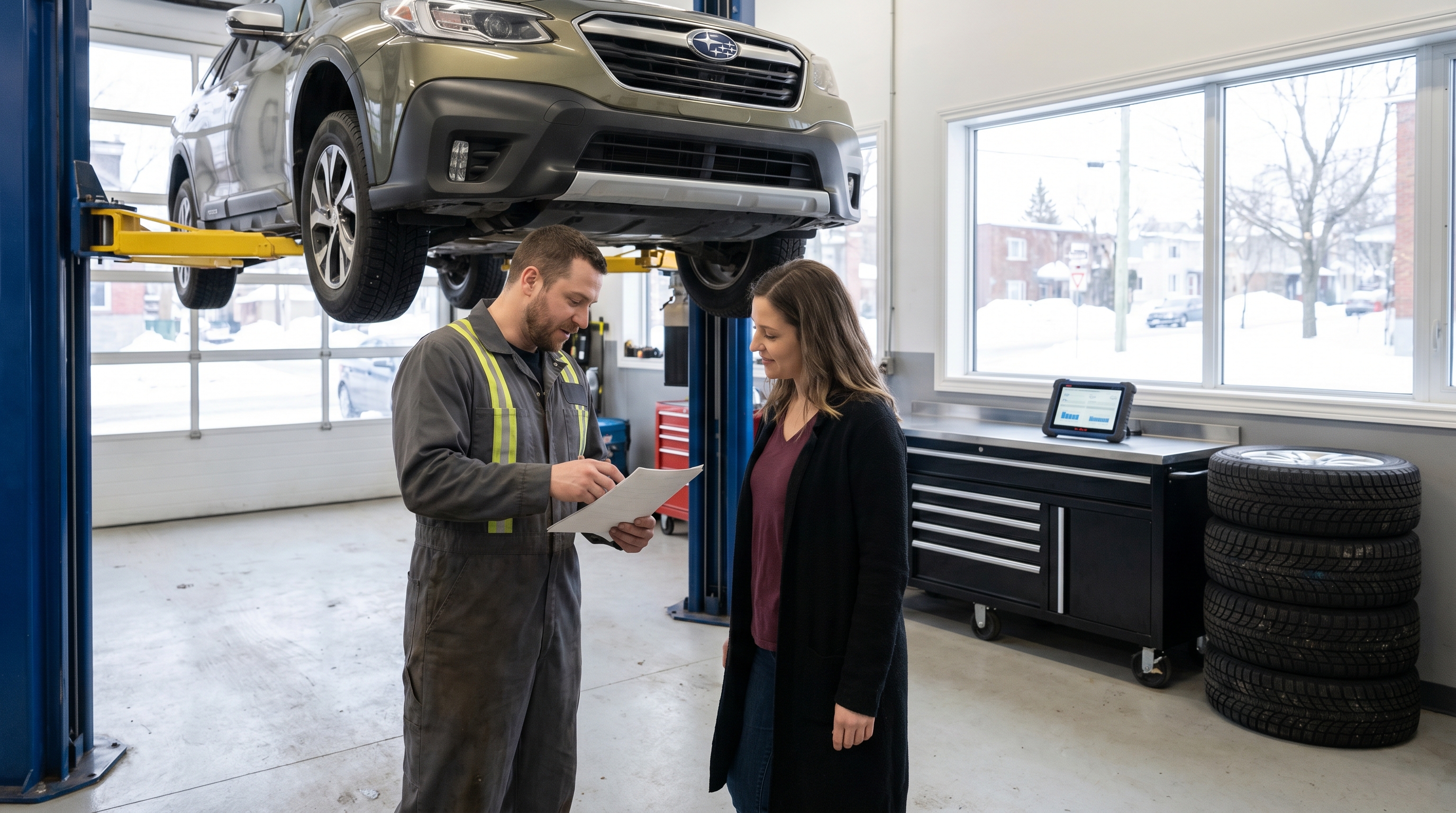
Direct Answer for Cross-Province Vehicle Registration
When you move to a new province or buy a used vehicle from out of province, you cannot simply transfer your existing registration. Most Canadian provinces mandate an out of province vehicle inspection to verify that the car meets local mechanical fitness, structural, and safety standards. The inspection is governed by the destination province, meaning a car that passed in British Columbia must still pass Ontario or Quebec standards upon arrival.
What Triggers an Out of Province Inspection in Canada
An out of province inspection is generally required in three scenarios:
- You are a new resident registering a vehicle in a different province.
- You purchased a used vehicle from another province or territory.
- You are registering a salvage vehicle that was previously written off in another jurisdiction.
Because vehicle standards vary across the country, the destination province needs to confirm the car is safe for its roads, regardless of prior status. Regulations change, and specific forms or exemptions depend on the province, so always verify the current requirements with the local licensing authority before booking an inspection.
Provincial Requirements and Scope
There is no single national standard for out of province vehicle inspections in Canada. Each province sets its own rules, forms, and licensed facility requirements.
Ontario
Ontario requires a Safety Standards Certificate (SSC) from an accredited Motor Vehicle Inspection Station (MVIS) to register a vehicle from out of province.
Quebec
In Quebec, certain vehicles may require a mechanical inspection by a SAAQ-recognized garage. For specific requirements regarding inspections for vehicles from outside the province, drivers must consult the SAAQ directly.
Alberta and British Columbia
Alberta demands an Out of Province Vehicle Inspection performed at a licensed facility. British Columbia requires a Provincial Authorization letter and a structural and mechanical inspection conducted by an authorized facility, such as those designated by the provincial insurance corporation.
Because exact forms, inspection criteria, and facility designations change, you must confirm the specific checklist with the destination province’s official registry or transport department.
Required Documents to Prepare
Before taking your vehicle to a garage for an out of province inspection, gather the following documents:
- Original out of province registration: Proves prior legal registration.
- Proof of ownership or bill of sale: Required to validate the legal transfer of the vehicle.
- Valid driver’s licence: Typically from the destination province, or your existing licence during the grace period.
- Vehicle Identification Number (VIN) verification: Some provinces require a physical VIN verification separate from the mechanical inspection.
- Destination province’s specific inspection form: Many provinces require you to download or obtain an official form that the mechanic must fill out.
Failure to bring the correct documents can result in the garage refusing to perform the inspection, causing unnecessary delays.
The Inspection Checklist: What Mechanics Look For
The inspection covers the core safety components of the vehicle. While the exact points differ by province, you can expect the mechanic to evaluate:
- Brakes: Rotor thickness, pad wear, caliper operation, and emergency brake functionality.
- Steering and Suspension: Ball joints, tie rods, struts, shocks, and wheel bearings.
- Tires and Wheels: Tread depth, tire integrity, and matching tire sizes.
- Lighting and Electrical: Headlights, brake lights, turn signals, and hazard lights.
- Glass and Body: Windshield condition, window operation, and structural integrity of the frame.
- Exhaust System: Leaks, secure mounting, and emissions compliance where applicable.
If the vehicle fails, the mechanic will provide a list of required repairs. You must fix these issues and return for a re-inspection.
Illustrative example:
Imagine you are moving from Alberta to Quebec. You bring your car to a local garage in Montreal. The mechanic checks the brakes and discovers the front brake pads are below the minimum thickness required by provincial standards. The vehicle fails the initial inspection. You authorize a brake repair, the work is completed, and the vehicle passes the re-inspection, allowing you to proceed with registration at the SAAQ.
Decision Rule: How to Prepare Your Vehicle
Use this checklist to prepare your vehicle for an out of province inspection and minimize the risk of failing:
- Verify destination requirements: Check the official government website for the destination province to download the correct forms.
- Check dashboard lights: Resolve any active Check Engine or ABS warning lights prior to the inspection.
- Inspect tires: Ensure tread depth is adequate and there is no visible sidewall damage. If moving to a province with mandatory winter tire laws, prepare accordingly.
- Test all lights: Replace any burnt-out bulbs in the headlights, taillights, and turn signals.
- Check windshield washer fluid and wipers: Ensure clear visibility without streaking or missing rubber.
- Pre-inspect leaks: Look under the vehicle for any fluid leaks and have them diagnosed before the official inspection.
Failure Modes: When This Advice Breaks Down
This general guidance stops being reliable under several specific conditions:
- Modified vehicles: Aftermarket lifts, engine swaps, or drastic modifications often require additional certifications or engineering approvals that a standard out of province inspection does not cover.
- Vintage or antique vehicles: Older vehicles may be subject to different or exempt standards depending on the province.
- Recently recalled vehicles: If your vehicle has an outstanding safety recall, some garages or provincial authorities may refuse the inspection until the recall is resolved by an authorized dealer.
If your vehicle falls into any of these categories, stop guessing and call a licensed garage or the provincial transport authority directly to confirm the correct path to registration.
What CarZen Helps With
CarZen is an automotive maintenance marketplace that connects Canadian drivers with independent garages. If you are preparing for an out of province vehicle inspection, CarZen can help you find local mechanics for pre-inspection diagnostics, brake repairs, tire changes, and routine maintenance that address common reasons for inspection failure. CarZen does not issue vehicle registrations, certify compliance, or perform official inspections on behalf of any provincial government. For final inspection requirements, legal time limits, and official forms, always consult the destination province’s licensing authority.
When to Contact a Garage Directly
Call a licensed inspection facility directly if:
- Your vehicle has structural damage or a history of major collisions.
- You have modified the vehicle with aftermarket parts.
- You need clarification on which specific provincial inspection form the garage requires.
- The vehicle is not currently safe to drive and requires towing.
Garages that perform official out of province inspections are familiar with provincial criteria and can tell you exactly what documents to bring before you arrive.
Frequently asked questions
How long is an out of province inspection valid?
Validity periods are set by the province and commonly range from 14 to 36 days. Check the specific regulations for the province where you are registering the vehicle.
Can any mechanic perform an out of province inspection?
No. The inspection must be performed at a facility authorized or licensed by the destination province's transport authority. Not all garages hold this specific accreditation.
What happens if my vehicle fails the inspection?
If the vehicle fails, you will receive a report detailing the failures. You must have the necessary repairs completed and return to an authorized facility for a re-inspection before you can register the vehicle.
Does an out of province inspection cover emissions testing?
It depends on the province. Some jurisdictions include emissions standards in their mechanical fitness checks, while others manage emissions testing through a separate program entirely.