Rustproofing Your Car in Canada: When It Helps, What It Costs, and How to Decide
A practical Canada-wide guide to rustproofing your car, covering road salt exposure, underbody inspections, warranties, and when to talk to a garage.
Quick answer
Rustproofing is most valuable for Canadian drivers whose vehicles face regular road salt, coastal moisture, or are still within the first few years of ownership. An annual inspection and targeted treatment from a reputable garage can slow corrosion, but no product eliminates rust entirely. Discuss options with a garage to choose the right approach for your climate and vehicle age.
Key facts
- Market
- CA
- Primary Causes of Rust
- Road salt, coastal moisture, and existing paint damage
- Recommended Action
- Annual underbody inspection; rustproofing most effective in first 5 years
- Service Boundary
- CarZen connects drivers with garages; diagnosis and warranty terms must be confirmed by the shop
- Date Verified
- 2026-04-11
Service boundaries
- CarZen helps Canadian drivers find and book rustproofing and underbody inspection services through its marketplace. CarZen does not perform physical inspections, diagnose structural rust, validate third-party rustproofing warranties, or guarantee specific corrosion outcomes. A qualified garage must assess your vehicle, apply the treatment, and confirm any warranty terms and coverage limits.
What can change the price
- Rustproofing prices vary based on the specific product used (e.g., drip oil vs. thick undercoating), vehicle size, garage labor rates, and regional market conditions. A single annual application typically ranges from $100 to $150 for cars and $120 to $200 for larger SUVs and trucks. These are practical estimates; always request a direct quote from a garage for an accurate price.
Sources and useful pages
Related CarZen services
Direct Answer: Is Rustproofing Worth It in Canada?
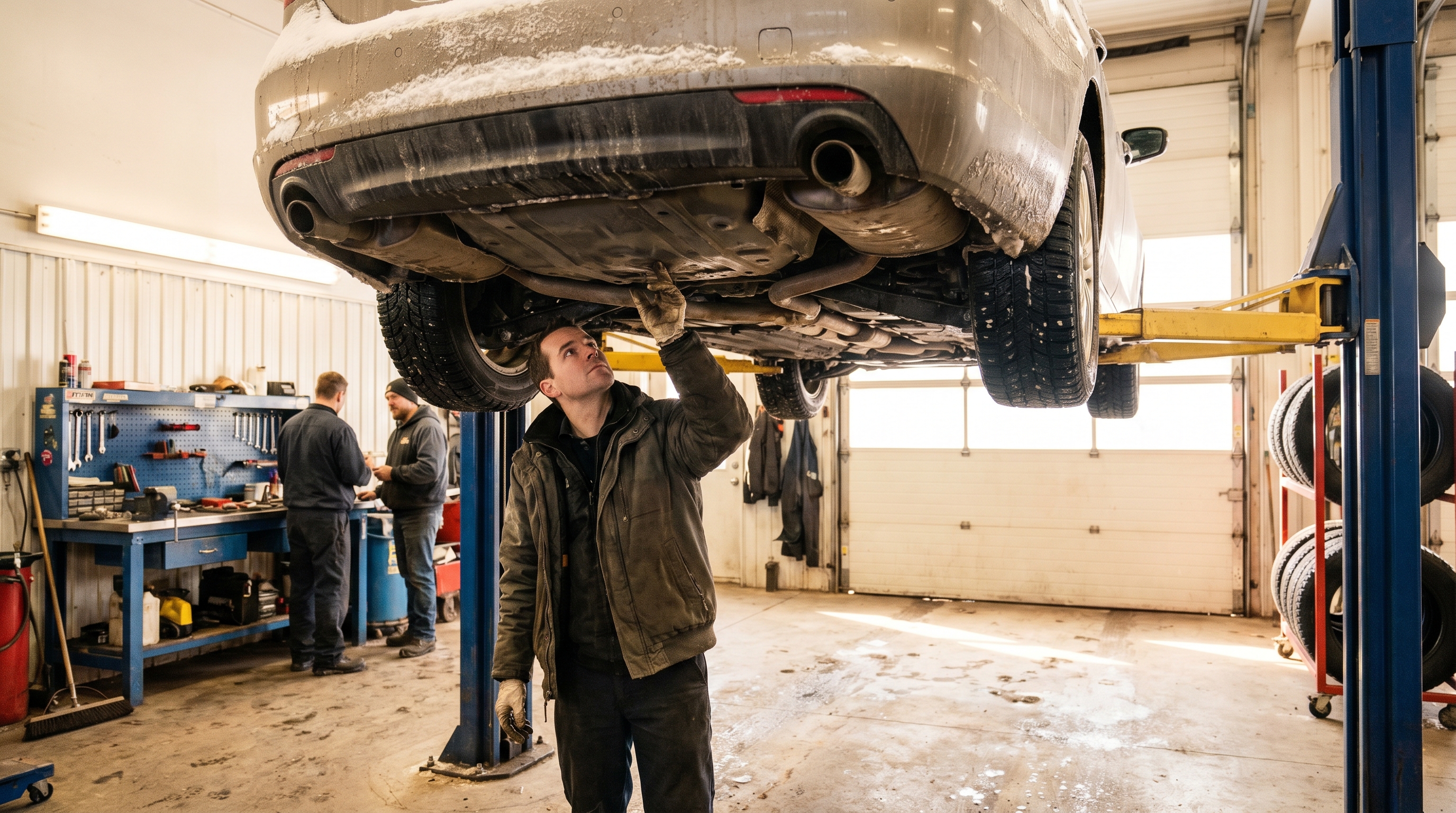
Rustproofing is a targeted preventive measure, not a cure. For Canadian drivers, it is most valuable when your vehicle is regularly exposed to road salt, coastal moisture, or is in the first few years of its lifespan. No treatment completely stops rust, but annual inspections and high-quality applications slow corrosion significantly. If your vehicle is older, already showing surface rust, or rarely sees winter roads, the return on investment drops. The best next step is an underbody inspection at a trusted garage to establish a baseline.
How Road Salt and Moisture Drive Corrosion
In Canada, the primary catalyst for automotive rust is sodium chloride—road salt—used extensively from late fall through early spring across most provinces. When salt mixes with water from snow, rain, or humidity, it creates a corrosive electrolyte that accelerates the oxidation of exposed steel and iron.
Coastal regions, such as parts of the Maritimes and British Columbia, face an added challenge: consistent airborne salt spray and high ambient moisture. Even if these areas use less road salt, the constant saline exposure attacks the undercarriage, wheel wells, and lower door seams.
Corrosion typically begins in hidden areas where moisture and salt collect and dry slowly: inside frame rails, behind splash guards, and along pinch welds. Once rust starts beneath the surface, it becomes progressively harder and more expensive to manage. Prevention, therefore, focuses on keeping salt and moisture out of these vulnerable crevices.
Types of Rustproofing and How They Work
There are two primary categories of rustproofing available in Canada: drip oil sprays and thick undercoatings.
Drip Oil Sprays
Drip oil (often called a dripless or annual oil spray) is a lightweight penetrating oil applied to the underbody, inside doors, and panel cavities. It displaces water and creeps into seams and crevices to create a barrier against salt. Because it remains slightly fluid, it self-heals if chipped, but it requires annual reapplication. It is highly effective for Canadian climates because it reaches the spots where salt accumulation starts. Expect some dripping for a day or two after application.
Thick Undercoatings
Thick undercoatings are asphalt- or rubber-based products sprayed onto the exposed underbody. They form a hard shell that resists abrasion from gravel and road debris. However, if applied over existing rust or if the coating cracks, moisture can become trapped underneath, potentially accelerating hidden corrosion. These products are generally not recommended for older vehicles or those with existing surface rust unless the underbody is thoroughly prepped.
When Rustproofing Makes Sense
Use this decision rule to determine if rustproofing is appropriate for your situation:
- Your vehicle is 5 years old or newer: The protective factory coatings are likely intact. Rustproofing now provides maximum protective benefit.
- You drive in salt-belt provinces or coastal areas: Regular exposure to road salt or ocean spray makes annual protection highly practical.
- Your vehicle currently has no visible rust: Prevention is far more effective than treating existing corrosion.
- You plan to keep the vehicle for 5+ years: The cumulative cost of annual treatments is often lower than the depreciation caused by visible rust.
If your vehicle is older, already exhibits rust bubbling, or spends winters in a low-salt region, the value proposition diminishes. You should prioritize fixing existing damage over applying a preventive coating.
Practical Checklist for Rustproofing Decisions
- [ ] Inspect seasonally: Check wheel wells, door bottoms, and the underbody each spring for bubbling paint or brown stains.
- [ ] Wash the undercarriage: High-pressure underbody washes during winter help physically remove accumulated salt.
- [ ] Verify warranty terms: Read the fine print. Some warranties require annual inspections and reapplications to remain valid.
- [ ] Consult a garage: Ask a technician to lift the vehicle for a proper baseline inspection before paying for any treatment.
- [ ] Address damage immediately: Touch up paint chips and scrape away surface rust before it penetrates the metal.
Understanding Warranties and Guarantees
Many rustproofing providers offer multi-year warranties or corrosion guarantees. These warranties are a common source of consumer disputes. It is critical to read the contract thoroughly before purchasing.
Key variables include whether the warranty covers surface rust, perforation rust (rust that eats entirely through the metal), or only specific panels. Most strict warranties only cover perforation, which takes years to develop. Others may exclude vehicles with prior damage or require strictly documented annual reapplications at specific facilities.
CarZen does not validate, administer, or guarantee third-party rustproofing warranties. You must confirm the exact terms, conditions, and claim procedures directly with the servicing garage or the warranty provider before agreeing to the service.
What CarZen Helps With
CarZen is an automotive maintenance marketplace that connects Canadian drivers with independent garages, mobile mechanics, and specialty service providers. For rustproofing, CarZen can help you find local garages that offer underbody inspections and rustproofing applications, compare quotes, and manage your booking.
CarZen does not physically inspect vehicles, apply treatments, or guarantee specific corrosion outcomes. Any diagnosis of structural integrity, selection of rustproofing products, or warranty coverage must be confirmed directly with the garage performing the work. CarZen’s role is to facilitate the connection, not to replace the professional judgment of a licensed technician.
Failure Modes: Where This Advice Breaks
Rustproofing is not a universal solution, and preventive guidance has distinct limitations:
- Pre-existing damage: Applying undercoating over existing rust or moisture traps the corrosive elements against the metal, often making the problem worse. The vehicle must be properly prepped.
- Hidden structural rot: Surface appearance is not a reliable indicator of frame health. If your vehicle has been in a collision, driven extensively on salted roads for a decade, or is showing signs of alignment issues, a standard visual inspection is insufficient. It requires a professional structural assessment.
- Product limitations: No product stops all rust. Harsh gravel roads can chip hard coatings, and failed seals can allow moisture into drip-treated cavities. Regular inspection remains mandatory.
Illustrative example:
Consider a three-year-old crossover driven daily in Quebec City through heavily salted winters. The owner plans to keep the vehicle for another seven years. Because the car is relatively new, faces severe salt exposure, and has a long intended service life, an annual drip oil application is a logical, low-cost method to slow corrosion. Conversely, if the same car were ten years old with visible rust on the rear quarter panels, the priority should shift from prevention to bodywork repair. A thick undercoating would be a poor choice here due to the high risk of trapping existing moisture against the metal.
When to Stop Guessing and Call a Garage
Stop relying on general advice and book a diagnostic inspection with a garage if you notice any of the following:
- Visible rust bubbling under the paint or along the seams of the doors, hood, or tailgate.
- Flaking or scaling rust on the frame rails or suspension mounting points.
- Unusual creaking or groaning from the suspension when driving over bumps.
- A detected fluid leak that could be mistaken for normal drip oil sweating.
If you are searching for antirouille automobile au Canada, the underlying mechanisms remain the same: an annual inspection by a qualified mechanic is the most reliable way to assess your specific needs and avoid paying for the wrong solution.
Frequently Asked Questions About Rustproofing in Canada
How often should I rustproof my car in Canada? Most Canadian driving conditions require annual rustproofing applications. Drip oil sprays must be reapplied every year as they gradually wash away. Hard undercoatings can last longer but require annual inspections to check for cracks or peeling.
Is electronic rustproofing effective? Electronic rustproofing devices claim to use a weak electrical current to prevent corrosion. Independent testing has repeatedly shown inconsistent and largely unproven results for standard passenger vehicles. Traditional chemical sprays applied by a reputable garage remain the industry standard.
Can I apply rustproofing myself? DIY rustproofing kits are available, but they carry significant risks. Without a hoist to safely elevate the vehicle, proper cleaning equipment, and the ability to drill access holes for cavity injection, you may fail to reach the critical areas where rust starts. Improper application of thick undercoatings over surface rust will actively accelerate corrosion.
Should I wash my car in winter if it has been rustproofed? Yes. Rustproofing slows the chemical process, but it does not stop salt from physically accumulating. High-pressure underbody washes are essential during winter to physically remove salt and slush from the frame rails and wheel wells, complementing the chemical barrier.
Does a new car need rustproofing? Modern vehicles have robust factory corrosion protection, but these coatings are designed for average use, not the severe, prolonged salt exposure common in Canadian winters. Applying high-quality rustproofing early in a vehicle’s life provides maximum long-term protection for drivers who plan to keep their cars well past the factory warranty period.
Frequently asked questions
How often should I rustproof my car in Canada?
Most Canadian driving conditions require annual rustproofing applications. Drip oil sprays must be reapplied every year as they gradually wash away. Hard undercoatings can last longer but require annual inspections to check for cracks or peeling.
Is electronic rustproofing effective?
Electronic rustproofing devices claim to use a weak electrical current to prevent corrosion. Independent testing has repeatedly shown inconsistent and largely unproven results for standard passenger vehicles. Traditional chemical sprays applied by a reputable garage remain the industry standard.
Can I apply rustproofing myself?
DIY rustproofing kits are available, but they carry significant risks. Without a hoist to safely elevate the vehicle, proper cleaning equipment, and the ability to drill access holes for cavity injection, you may fail to reach the critical areas where rust starts. Improper application of thick undercoatings over surface rust will actively accelerate corrosion.
Should I wash my car in winter if it has been rustproofed?
Yes. Rustproofing slows the chemical process, but it does not stop salt from physically accumulating. High-pressure underbody washes are essential during winter to physically remove salt and slush from the frame rails and wheel wells, complementing the chemical barrier.