When to Use a Block Heater in Canada: Practical Cold-Weather Guide for Engine Starts and Timers
Practical Canadian guide for when to use a block heater, covering temperature thresholds, timer settings, fuel savings, and Prairie vs mild winter differences.
Quick answer
Use a block heater in Canada when temperatures drop below -15°C. Plug in for 2-4 hours before starting to reduce engine wear, improve fuel economy, and ease cold starts. In Prairie or Northern regions, expect to use it regularly from November through March. In mild coastal or southern urban areas, usage is occasional.
Key facts
- Market
- CA
- Temperature threshold
- Below -15°C
- Recommended preheat time
- 2-4 hours
- Fuel economy benefit
- Up to 10% on short trips in deep cold
- Typical electrical cost
- $0.10-$0.30 per 4-hour session depending on local rates and heater wattage
Service boundaries
- CarZen can help you find a qualified garage for block heater installation, electrical system inspection, or winterization services.
- CarZen cannot verify your specific vehicle's block heater wattage, confirm your home electrical circuit capacity, or provide real-time electrical rate calculations.
- Consult a licensed mechanic if your block heater cord is damaged, your vehicle struggles to start despite being plugged in, or you smell burning plastic near the engine bay.
- Electrical work for installing outdoor outlets should be performed by a certified electrician, not a mobile mechanic.
What can change the price
- Block heater replacement parts typically range from $40-$120 depending on vehicle make and model; labour costs vary by garage and accessibility.
- Engine block heater installation by a garage generally ranges from $100-$250 in labour, with prices increasing for complex engine configurations or if the freeze plug is difficult to access.
- Installing a dedicated outdoor electrical outlet for your block heater typically ranges from $150-$400, depending on your home's existing wiring and local electrician rates.
- A block heater timer costs $20-$50 at hardware stores; smart plugs with temperature-triggered scheduling range from $30-$80.
Sources and useful pages
Related CarZen services
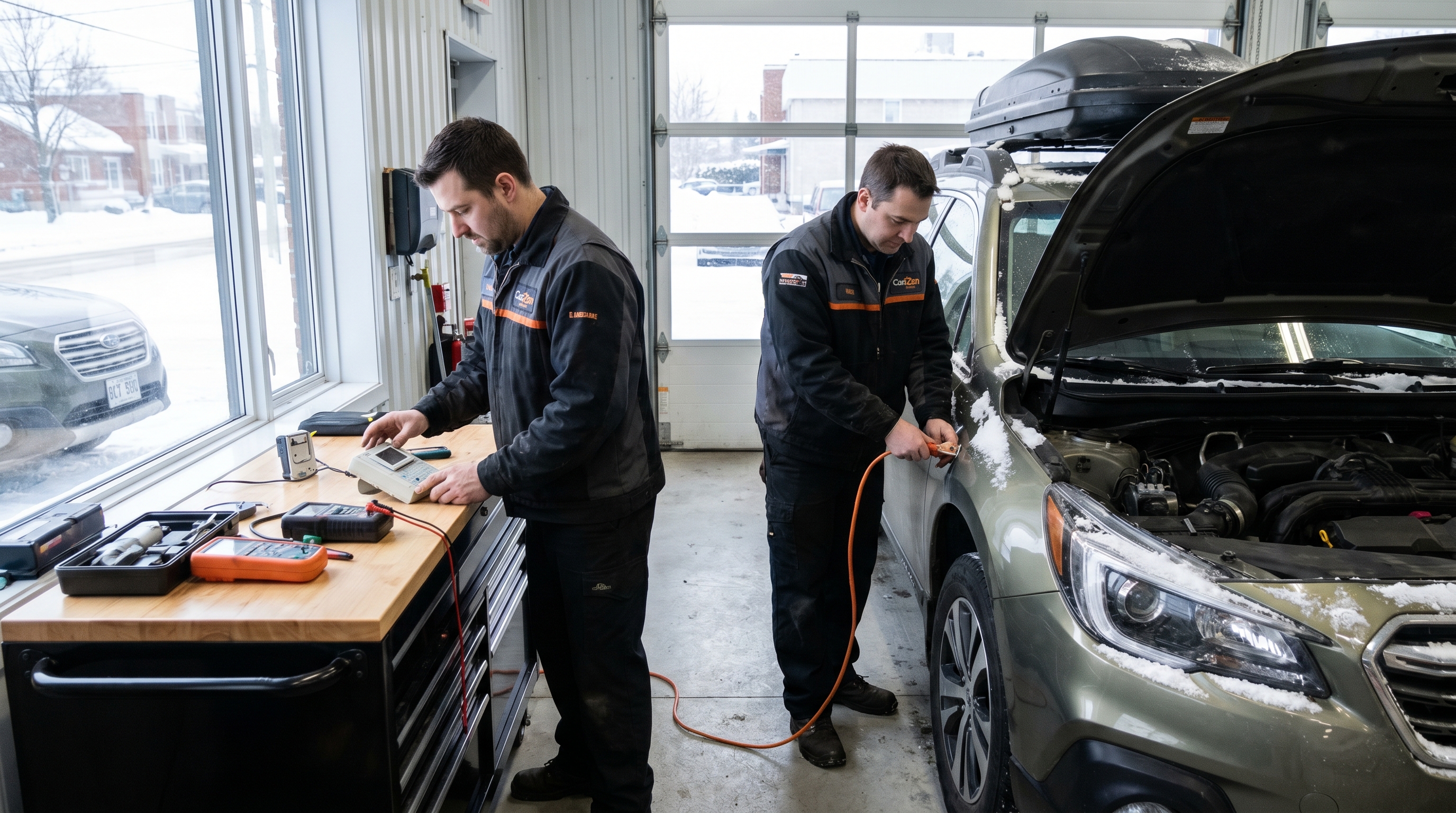
When to Plug In: The Direct Answer
Use a block heater in Canada when the outside temperature drops below -15°C. Plug your vehicle in for 2 to 4 hours before you plan to start the engine. This reduces cold-engine wear, improves lubrication, makes starting easier, and can reduce fuel consumption by up to 10% on short trips in deep cold.
Drivers in Prairie provinces (Alberta, Saskatchewan, Manitoba), Northern Ontario, Northern Quebec, and the territories should expect to use a block heater regularly from November through March. Drivers in milder urban regions like coastal British Columbia, southern Ontario, or the St. Lawrence Lowlands may only need it a handful of times per year during extreme cold snaps.
The secondary question “quand utiliser un chauffe-moteur au Canada” follows the same rule: active use below -15°C, with regular deployment in regions where sustained cold is the norm.
Key Temperature Thresholds and Decision Rules
Below -15°C: Plug in
This is the widely recommended threshold from Natural Resources Canada and most Canadian automakers. At -15°C, engine oil thickens significantly, reducing its ability to circulate and protect critical engine parts during the first moments after startup.
Between -10°C and -15°C: Optional, depends on vehicle and oil
Modern synthetic oils flow better at low temperatures. If your vehicle uses 0W-20 or 0W-30 synthetic oil and is in good condition, you may skip the block heater at -10°C. However, older vehicles, diesel engines, or vehicles with conventional oil still benefit from preheating in this range.
Above -10°C: Generally not needed
In most cases, a healthy vehicle does not require a block heater above -10°C. Plugging in wastes electricity and provides minimal mechanical benefit.
Decision rule for daily use
If the overnight low is forecast to be -15°C or colder, plug in your vehicle. If you live in a region where -15°C nights are common for weeks at a time, make plugging in part of your daily routine from December through February.
How Long to Run a Block Heater
The 2-4 hour window
Running a block heater for 2 to 4 hours before startup is sufficient to warm the engine block and thin the oil. Running it longer than 4 hours provides diminishing returns and wastes electricity. Running it all night on a standard 1,000-1,500 watt heater can cost $1.50-$3.00 per night depending on your local rate.
Using a timer
A block heater timer is a practical investment. Set it to turn on 2-4 hours before your planned departure time. This saves money and reduces unnecessary energy consumption.
Smart plug option
Smart plugs connected to a weather-triggered schedule can automate this process further. Some models allow you to set a rule: “activate block heater when temperature drops below -15°C for 3 hours before my 7:00 AM departure.” This removes guesswork entirely.
Urban Mild Winters vs Prairie and Northern Conditions
Coastal BC and Southern Ontario
In Vancouver, Victoria, or Toronto, temperatures rarely sustain below -15°C for long periods. A block heater may only be needed 3-10 times per winter. Many drivers in these regions never use one. If your vehicle is parked in a heated garage or underground lot, you almost certainly do not need to plug in.
Prairie provinces and the North
In Winnipeg, Regina, Saskatoon, or Edmonton, -20°C to -30°C mornings are routine for weeks at a time. In these regions, a block heater is essential equipment, not optional. Many drivers in these areas also use battery blankets and oil pan heaters in addition to block heaters.
Northern Quebec and Labrador
Regions like Saguenay, Abitibi, Sept-Îles, and Schefferville experience deep cold that mirrors Prairie conditions. The same -15°C rule applies, but the practical reality is that block heaters are in near-continuous use from late November through March.
Illustrative example:
A driver in Winnipeg commutes daily at 7:00 AM. From mid-December through mid-February, overnight lows are consistently between -20°C and -35°C. She uses a timer set to activate the block heater at 4:00 AM, running for 3 hours. Her electrical cost is approximately $15-$25 per month during peak winter. Without the block heater, her engine typically cranks for 5-8 seconds before starting, and the vehicle runs rough for the first 2-3 minutes. With the block heater, the engine starts within 1-2 seconds and runs smoothly almost immediately.
Fuel Economy, Engine Wear, and Tradeoffs
Fuel savings mechanism
A cold engine runs in open-loop mode, injecting extra fuel to maintain idle and warm the catalytic converter. By pre-warming the engine with a block heater, the vehicle reaches closed-loop operation faster, reducing fuel waste. Natural Resources Canada estimates fuel savings of up to 10% on short trips (under 10 km) in cold weather when using a block heater.
Engine wear reduction
The majority of engine wear occurs during cold starts before oil has fully circulated. A block heater warms the coolant, which in turn warms the engine block and keeps oil thinner. This allows oil to reach critical bearings and camshaft surfaces faster.
Electrical cost tradeoff
A typical 1,200-watt block heater running for 3 hours consumes 3.6 kWh. At $0.12-$0.15 per kWh (common Canadian residential rates), this costs approximately $0.43-$0.54 per use. For a Prairie driver using it 90 times per winter, the seasonal electrical cost is roughly $40-$50. This is modest compared to the potential fuel savings and reduced engine wear.
Diesel engines
Diesel engines benefit even more from block heaters due to the higher compression ratios and the tendency of diesel fuel to gel at very low temperatures. Some diesel vehicles also have glow plug systems that work alongside the block heater.
Practical Block Heater Usage Checklist
Before the cold season:
- [ ] Inspect your block heater cord for cracks, fraying, or damage
- [ ] Test the block heater by plugging it in and listening for a faint hum or feeling the engine block for warmth after 30 minutes
- [ ] Install a timer or smart plug if you plan to use the heater regularly
- [ ] Ensure your outdoor electrical outlet is grounded and in good condition
- [ ] Consider a battery blanket if you live in regions where temperatures regularly drop below -30°C
Daily winter routine:
- [ ] Check the overnight forecast
- [ ] If below -15°C, plug in or confirm your timer/smart plug is active
- [ ] Run the heater for 2-4 hours before departure
- [ ] Unplug before driving; never drive with the cord connected
- [ ] Store the cord properly to avoid damage from snow, ice, or parking lot plows
Failure Modes: When This Advice Breaks
Damaged block heater cord
If your block heater cord is cracked, frayed, or has exposed wires, do not plug it in. This is a fire hazard and a shock risk. Have a garage replace the cord before winter.
Vehicle still struggles to start
If your engine cranks slowly or fails to start despite being plugged in at -20°C or below, the issue may not be the block heater. Possible causes include:
- Weak or failing battery (most common)
- Faulty block heater element (it may have burned out)
- Starter motor issues
- Fuel system problems
In this case, stop guessing and book a diagnostic appointment with a garage through CarZen.
Blown fuses or tripped breakers
If plugging in your block heater trips your home’s circuit breaker, the heater may be drawing too much current due to a short circuit, or your outlet may be shared with other high-draw devices. Have an electrician inspect the circuit.
Extension cord hazards
Use a heavy-duty outdoor-rated extension cord. Lightweight indoor cords can overheat, melt, or fail in cold temperatures. Do not use a cord that is visibly damaged.
No exterior outlet available
If you park on the street and have no access to an outlet, you cannot use a block heater. In this case, ensure your battery is in excellent condition, use synthetic oil rated for cold temperatures, and consider a battery blanket as an alternative if parking in an attached garage is not an option.
Extreme cold below -40°C
At temperatures approaching -40°C, even a block heater may not be sufficient for easy starting. Additional measures include battery blankets, oil pan heaters, transmission heaters, and indoor parking when possible. At these temperatures, follow local guidance and avoid unnecessary driving.
What CarZen Helps With
CarZen connects Canadian drivers with garages for winterization services, including:
- Block heater installation and replacement
- Block heater cord inspection and repair
- Battery testing and replacement
- Winter oil changes with synthetic oil
- General pre-winter inspections
CarZen helps you find a garage, compare quotes, and book an appointment. CarZen does not perform electrical work on homes, test your residential wiring, or verify that your outdoor outlet meets code. For home electrical concerns, hire a licensed electrician.
If your vehicle is hard to start in cold weather and you are unsure whether the block heater is working, a garage can test the heater element and cord, check your battery, and diagnose the root cause.
FAQ
Q: At what temperature should I plug in my block heater? A: Plug in your block heater when the temperature drops below -15°C. This is the threshold recommended by Natural Resources Canada and most Canadian vehicle manufacturers.
Q: How long should I run my block heater before starting the engine? A: Run your block heater for 2 to 4 hours before starting. This is sufficient to warm the engine block and thin the oil. Running it longer wastes electricity with minimal added benefit.
Q: Does using a block heater save fuel? A: Yes, on short trips in cold weather. A pre-warmed engine reaches efficient operating temperature faster, reducing fuel waste. Natural Resources Canada estimates up to 10% fuel savings on short cold-weather trips.
Q: Can I leave my block heater plugged in all night? A: You can, but it is not necessary and wastes electricity. A timer set to activate the heater 2-4 hours before your departure time is more efficient and cost-effective.
Q: My car struggles to start even when plugged in. What should I do? A: This suggests a problem beyond just cold oil. Have your battery tested first, as weak batteries are the most common cause of hard cold starts. If the battery is healthy, ask a garage to test the block heater element and inspect the starter and fuel system. You can book a diagnostic through CarZen.
Frequently asked questions
At what temperature should I plug in my block heater?
Plug in your block heater when the temperature drops below -15°C. This is the threshold recommended by Natural Resources Canada and most Canadian vehicle manufacturers.
How long should I run my block heater before starting the engine?
Run your block heater for 2 to 4 hours before starting. This is sufficient to warm the engine block and thin the oil. Running it longer wastes electricity with minimal added benefit.
Does using a block heater save fuel?
Yes, on short trips in cold weather. A pre-warmed engine reaches efficient operating temperature faster, reducing fuel waste. Natural Resources Canada estimates up to 10% fuel savings on short cold-weather trips.
Can I leave my block heater plugged in all night?
You can, but it is not necessary and wastes electricity. A timer set to activate the heater 2-4 hours before your departure time is more efficient and cost-effective.
My car struggles to start even when plugged in. What should I do?
Have your battery tested first, as weak batteries are the most common cause of hard cold starts. If the battery is healthy, ask a garage to test the block heater element and inspect the starter and fuel system. You can book a diagnostic through CarZen.