Canadian Winter Emergency Car Kit Checklist: What to Pack and How to Prepare
Build a reliable winter emergency car kit for Canadian driving. Use this checklist to prepare for remote routes, freezing temperatures, and roadside breakdowns.
Quick answer
A Canadian winter emergency car kit must include a thermal blanket, candle-powered heater, jumper cables, a compact shovel, and a first-aid kit. Preparing this kit is a critical last line of defense against breakdowns caused by cold weather, aging batteries, and worn winter tires.
Key facts
- Market
- CA
- Primary Risk
- Vehicle breakdown in sub-zero temperatures
- Core Kit Category
- Warmth, signaling, traction, and basic tools
- Kit Cost Estimate
- $50 to $300+ CAD depending on pre-assembled vs. custom builds
Service boundaries
- CarZen connects drivers with independent Canadian garages for seasonal inspections, tire changes, and battery testing to prevent breakdowns.
- The contents of a physical emergency kit, specific legal requirements for highway travel, and official road condition reports must be verified by the driver.
- CarZen does not manufacture, sell, or directly endorse specific emergency kit brands.
What can change the price
- Pre-assembled commercial kits range from $50 to $150 CAD but often contain low-quality tools or lack vital cold-weather gear like proper wool blankets.
- Building a custom kit ranges from $100 to $300+ CAD depending on the quality of the booster pack, the inclusion of a satellite messenger, and medical supplies.
- Variables that change the price include choosing a battery jump-starter over basic cables, adding sand litter for traction, and the quality of the thermal wear.
Sources and useful pages
Related CarZen services
The Direct Answer: Your Baseline Winter Emergency Kit
A reliable winter emergency car kit in Canada requires active survival gear, not just basic repair tools. Before driving on remote routes or in heavy snow, your vehicle must carry supplies to keep you warm, signal for help, regain traction, and handle minor mechanical failures.
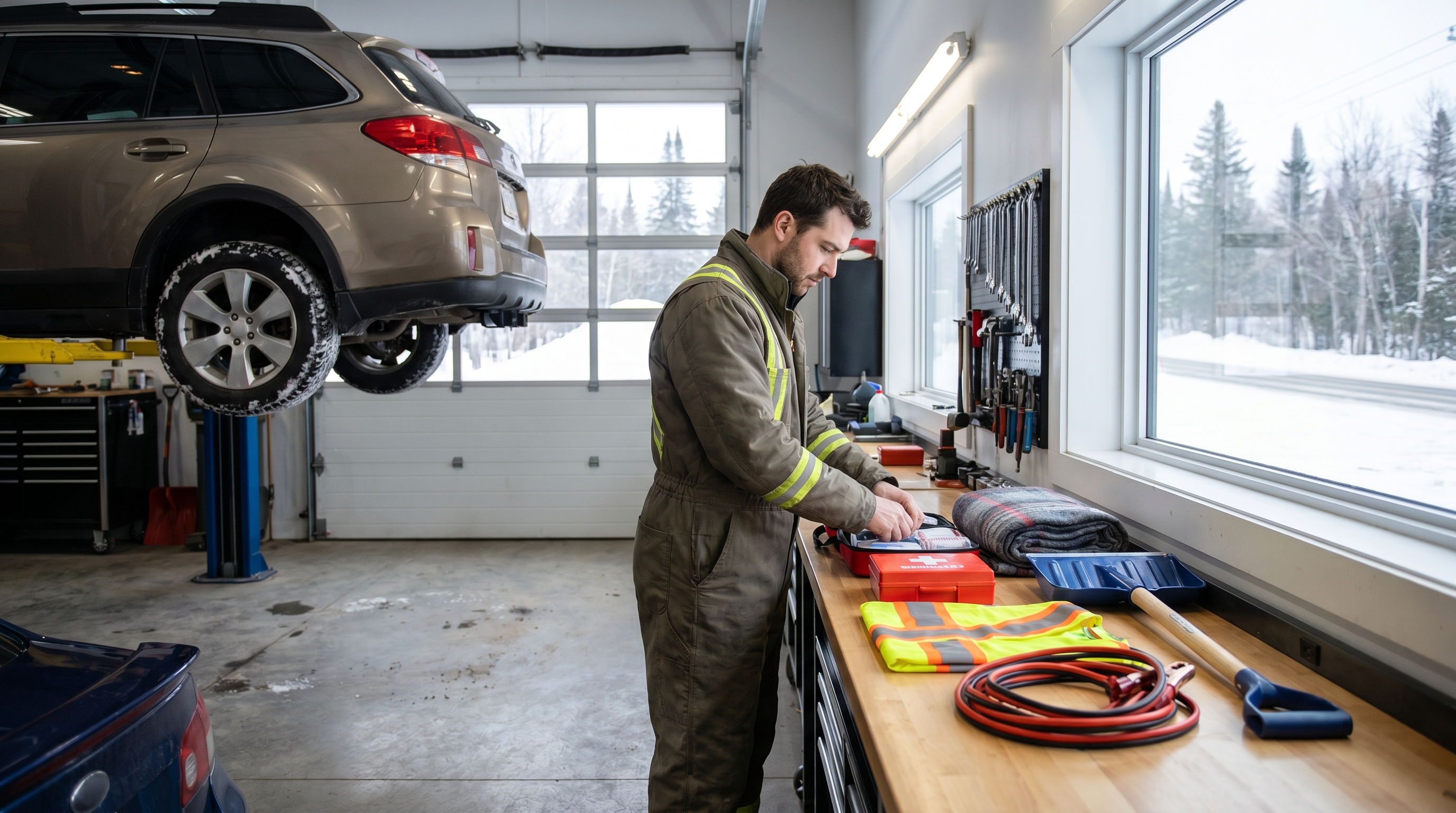
At a minimum, your kit needs a wool or thermal blanket, a metal coffee can with high-quality candles (for emergency warmth), jumper cables or a lithium jump-starter, a collapsible shovel, a bright distress flag or reflective triangles, and a first-aid kit. Emergency preparedness is ultimately a last line of defense. The most effective strategy to survive a winter breakdown is preventing it through a seasonal mechanical inspection.
The Winter Emergency Kit Checklist
Do not rely on standard summer kits. Canadian winter demands specific survival mechanisms.
Survival and Warmth
- Thermal Blankets: Mylar emergency blankets are compact but fragile. Supplement them with a thick wool blanket.
- Candle-Powered Heater: A deep metal can with a few thick emergency candles can raise the interior temperature of a stranded vehicle by several degrees safely.
- Extra Cold-Weather Clothing: Keep a spare toque, insulated gloves, and thick socks in a dry bag. Wet summer gear offers no protection.
Traction and Mobility
- Compact Folding Shovel: Required for digging out tires and exhaust pipes.
- Traction Aids: A small bag of non-clumping clay cat litter, sand, or heavy-duty traction mats.
- Tow Strap: A 10,000 lb rated strap.
Vehicle Recovery and Tools
- Jumper Cables or Jump Starter: Cold temperatures severely degrade battery cranking power. A portable lithium jump-starter is often more reliable than relying on a second vehicle.
- Ice Scraper and Snow Brush: Essential for maintaining full visibility.
- Flashlight and Extra Batteries: LED headlamps are superior as they leave your hands free.
Signaling and Safety
- Reflective Triangles or Road Flares: Vital for making your stopped vehicle visible to plows and traffic during whiteout conditions.
- Brightly Colored Distress Flag: Tie a high-visibility flag to your antenna or window to signal distress.
- Fully Charged Power Bank: To keep your mobile phone alive.
Connecting Preparedness to Vehicle Maintenance
An emergency kit does not replace a mechanically sound vehicle. A seasonal winter inspection addresses the root causes of most winter breakdowns.
Battery Health
Battery capacity drops significantly in freezing temperatures. A battery that starts reliably at 10°C may fail completely at -20°C. Have a garage perform a cold cranking amps (CCA) test before winter sets in. If the battery is over four years old, proactive replacement is a sound financial and safety decision.
Winter Tires
All-season tires harden and lose grip below 7°C. True winter tires use softer rubber compounds to maintain traction on ice and packed snow.
Decision Rule: If you commute outside of major urban centers or travel between cities, winter tires are mandatory for safe stopping distances regardless of local legal minimums.
SAAQ and Provincial Inspections
In Quebec, winter tires are legally required from December 1 to March 15. When booking a seasonal tire swap or inspection through CarZen, the garage can simultaneously check your brake wear, steering components, and exhaust system to ensure they are safe for harsh conditions.
Risk Management for Remote Routes
Driving outside of cellular coverage changes the stakes of a breakdown.
Illustrative example: A driver is traveling on Highway 117 in rural Quebec during a January snowstorm and hits black ice. The vehicle slides into a snowbank and the engine stalls. Because there is no cell service, the driver cannot call a tow truck. They must rely on their winter kit—using the candle for heat, putting on the spare gloves and toque, periodically clearing the exhaust pipe with the shovel to prevent carbon monoxide buildup, and placing reflective markers outside the vehicle to alert passing plows or the Sûreté du Québec.
If you frequently drive through dead zones, a satellite messenger device is a highly recommended investment.
Failure Modes: Where This Advice Breaks
This guidance has strict physical and mechanical limits. Understanding these failure modes dictates when you must stop attempting a self-rescue and wait for professionals.
- Exhaust Blockage: If your tailpipe is buried in a snowbank, running the engine for heat will fill the cabin with lethal carbon monoxide. You must shovel the exhaust clear before idling.
- Frozen Fuel Lines: A kit cannot fix a frozen fuel line. This requires mechanical warming or fuel additives, and is why experts recommend keeping your gas tank at least half full in winter to prevent condensation.
- Severe Mechanical Failure: If your vehicle slides into a ditch and damages the steering linkage or ruptures the oil pan, no amount of kitty litter or shoveling will get you back on the road safely. Do not guess the structural integrity of the vehicle. Call a tow truck.
- Frostbite Risk: If you are improperly dressed and the temperature is below -30°C, stepping out of the vehicle to dig out tires carries a high risk of rapid frostbite. Stay in the vehicle and signal for help.
How CarZen Helps Canadian Drivers
CarZen is an automotive maintenance marketplace that connects drivers with trusted, independent Canadian garages. For winter preparedness, CarZen helps drivers:
- Book seasonal mechanical checks and inspections.
- Compare quotes for winter tire installations (rims, tires, and swaps).
- Schedule battery testing and replacement.
- Find a mobile mechanic if the vehicle is immobile but safe.
CarZen does not replace official provincial road condition reports or emergency dispatch services. In a life-threatening emergency, always call 911 or your local provincial police. CarZen provides the mechanical network to help ensure your vehicle is roadworthy before you face an emergency.
What to Ask the Garage
When you book a winter inspection through CarZen, ask the mechanic these specific questions:
- “What were the exact Cold Cranking Amps (CCA) my battery tested at, and how does that compare to the rating for this temperature?”
- “Is there enough tread depth on my winter tires for deep snow, and what is the physical age of the tires?”
- “Did you check the front and rear wiper blades and the freeze-rating of the windshield washer fluid?”
- “Are the exhaust system mounts and heat shields secure and free of severe corrosion?”
Frequently asked questions
What is the most critical item in a winter emergency car kit?
The most critical items are heat retention and signaling tools. A thick wool blanket or sleeping bag keeps you warm if the engine fails, while reflective triangles or a bright flag are necessary to make your vehicle visible to snowplows in low-visibility conditions.
Can I use an electric heater in my car to stay warm during a breakdown?
No. Standard electric heaters require the engine and alternator to run, which wastes fuel and risks carbon monoxide poisoning if the exhaust is blocked by snow. A deep metal can with emergency candles is a safer, reliable way to generate a few degrees of cabin heat.
How do I prevent my car battery from dying in the winter?
Cold temperatures drastically reduce battery cranking power. Prevent failures by having a garage perform a load test before winter. Keep the battery terminals clean and tight. If your battery is over four years old, consider proactively replacing it before it fails in extreme cold.
Why should I keep my gas tank full during winter?
A full gas tank prevents condensation from forming on the inside of the tank, which prevents water from dropping into the fuel lines and freezing. It also ensures you have enough fuel to run the engine periodically for heat if you become stranded while waiting for a tow.
Is a pre-assembled emergency kit sufficient for Canadian winters?
Most pre-assembled kits are a good starting point but lack adequate cold-weather survival gear. You should always supplement commercial kits with a proper wool blanket, a candle-powered heater, and a high-visibility distress flag. Verify the quality of the jumper cables, as cheap ones may not carry enough current for cold engines.