Winter Tire Laws by Province in Canada: Where They Are Mandatory and Recommended
Learn which provinces require winter tires by law and where they are recommended before booking seasonal service across Canada.
Quick answer
Quebec is the only province where winter tires are mandatory from December 1 to March 15 for most passenger vehicles. British Columbia enforces winter tires on specific mountain highways. All other provinces strongly recommend winter tires but do not mandate them provincially.
Key facts
- Market
- Canada (CA)
- Mandatory Province
- Quebec (December 1 to March 15)
- Highway Enforcement
- British Columbia (select routes, October 1 to March 31)
- Federal Recommendation
- Transport Canada recommends winter tires for cold, snowy, or icy conditions
Service boundaries
- CarZen connects drivers with independent garages for seasonal tire changes, storage, and inspections, but cannot provide legal advice or confirm real-time regulatory enforcement.
- Specific legal requirements, fines, and seasonal dates should be verified directly with provincial transportation ministries or the SAAQ, as rules can change.
- Vehicle-specific exemptions (such as certain classic cars or studded tire rules) must be confirmed by the garage or the official provincial authority.
What can change the price
- Tire installation costs vary based on whether tires are mounted on existing rims or require a new set.
- Geographic location, garage labor rates, and the choice between independent garages and dealerships significantly alter the final price.
- Additional services like tire storage, wheel balancing, or new pressure sensors add to the base estimate.
Sources and useful pages
Related CarZen services
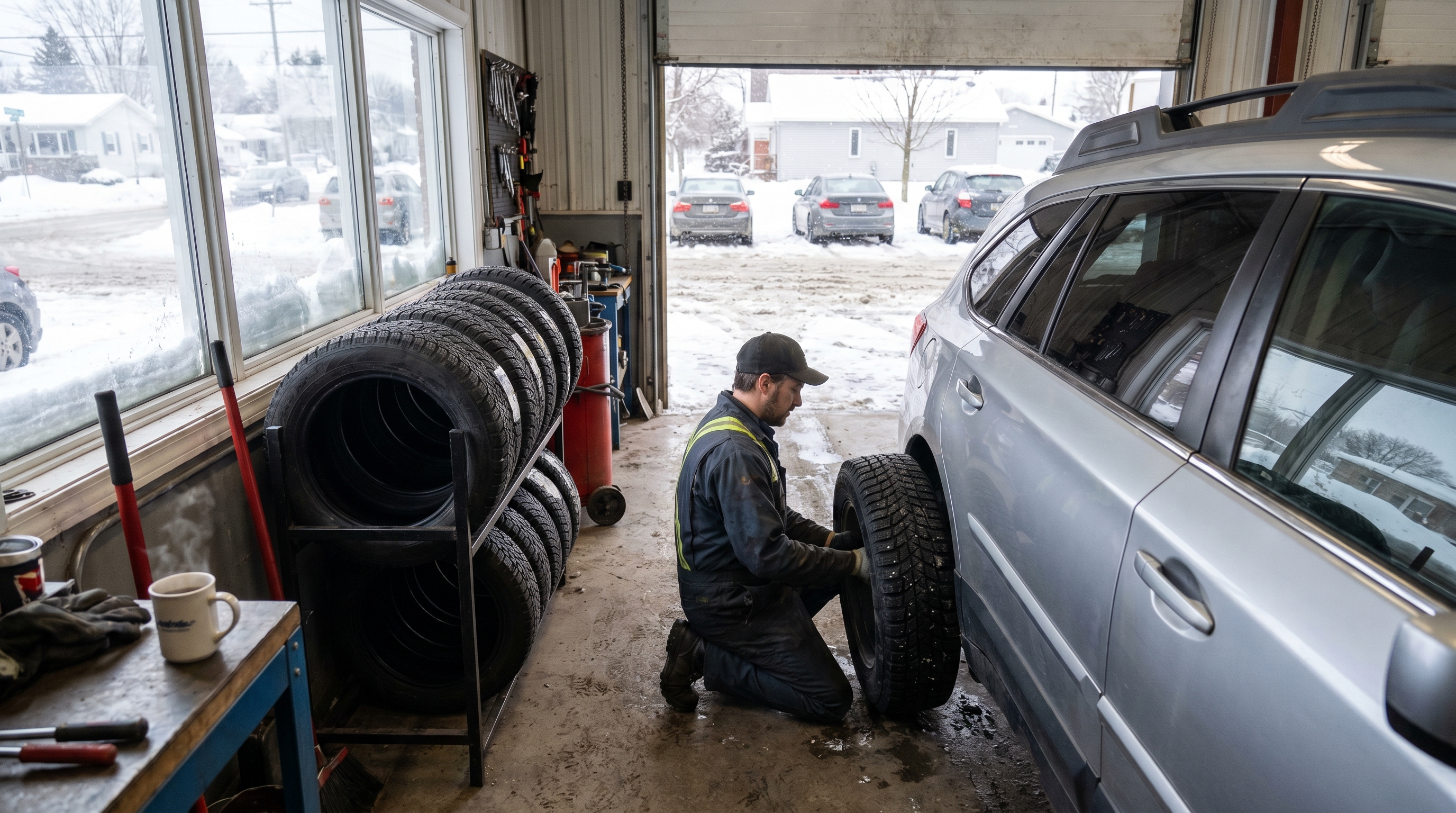
Direct Answer: Winter Tire Mandates Across Canada
Winter tire laws in Canada depend entirely on where you drive. Quebec is the only province that legally mandates winter tires for most passenger vehicles from December 1 to March 15. British Columbia requires winter tires or chains on many mountain highways and northern routes from October 1 to March 31 (extended to April 30 on some roads). All other provinces and territories strongly recommend winter tires but leave the choice to the driver. Transport Canada advises using winter tires in cold, snowy, or icy conditions.
Drivers must verify the specific rules for their province and travel routes before booking seasonal service, as local enforcement and definitions of acceptable tires vary.
Canada-Wide Winter Tire Rules by Province
Quebec: Strict Mandatory Law
Quebec’s Highway Safety Code requires all passenger vehicles, taxis, and rental cars registered in the province to be equipped with tires designed specifically for winter driving. The legal season runs from December 1 to March 15.
Tires must bear the three-peak mountain snowflake (3PMSF) symbol. Studded tires are permitted but come with specific seasonal and vehicle-type restrictions. Fines for non-compliance can range from $200 to $300, plus administrative fees.
British Columbia: Mandatory on Designated Routes
British Columbia does not have a province-wide winter tire law for all roads. Instead, the province designates specific highways—particularly mountain passes and northern routes—where winter tires or chains are mandatory from October 1 to March 31. On some select routes, this requirement extends to April 30.
Accepted tires in BC include those bearing the 3PMSF symbol or the M+S (Mud and Snow) designation. However, for severe conditions, tires with the 3PMSF symbol offer a measurable safety advantage over older M+S tread designs.
All Other Provinces and Territories: Recommended
Ontario, Alberta, Saskatchewan, Manitoba, New Brunswick, Nova Scotia, Prince Edward Island, Newfoundland and Labrador, Yukon, Northwest Territories, and Nunavut do not have provincial laws mandating winter tires.
Despite the lack of a legal mandate, provincial insurers and transportation ministries widely recommend installing four matching winter tires once temperatures consistently drop below 7°C.
Decision Rule for Canadian Drivers
Use this checklist to determine your obligations:
- Do you live in Quebec? You must install winter tires by December 1.
- Are you driving on BC mountain highways or northern routes? Check DriveBC.ca for route-specific tire and chain requirements.
- Are you driving outside QC and BC? You are not legally required to have winter tires, but Transport Canada strongly recommends them for driving in snow, ice, or temperatures below 7°C.
- Do you drive into QC or BC? You must comply with their specific tire laws, regardless of where your vehicle is registered.
Tradeoffs: Winter Tires vs. All-Season Tires
Not all winter-ready tires perform identically. Drivers face distinct tradeoffs when choosing equipment.
- 3PMSF Winter Tires: Provide the best grip in snow, ice, and sub-zero temperatures due to softer rubber compounds. They wear out faster on warm, dry pavement and should be removed in spring.
- M+S Tires: Meet BC’s minimum legal requirement for designated routes but do not undergo the same rigorous snow traction testing as 3PMSF tires. Performance in deep snow or ice is significantly lower.
- All-Season Tires: Designed for moderate climates. The rubber hardens in freezing temperatures, severely increasing stopping distances on ice and packed snow.
Illustrative example:
A driver commuting daily from Gatineau, Quebec, to Ottawa, Ontario, must comply with Quebec law and have winter tires installed by December 1. Even though their daily route includes Ontario (where winter tires are not mandatory), the vehicle is registered in Quebec and must meet Quebec’s requirements. If caught without winter tires on the Quebec side of the bridge, the driver faces a fine.
Why All-Season Tires Fail in Winter
All-season tires use rubber compounds optimized for warm climates and long tread life. When temperatures drop below 7°C, the rubber hardens, reducing friction. In emergency braking tests on ice, vehicles equipped with all-season tires consistently require longer stopping distances than those with winter tires. This mechanical failure mode is why Transport Canada and provincial bodies recommend winter tires regardless of legal mandates.
Where This Advice Breaks
This guidance is based on provincial highway regulations. The advice stops being reliable under the following conditions:
- Municipal bylaws: Some municipalities may have localized parking or traction requirements that differ from provincial laws.
- Commercial vehicles: Regulations for heavy trucks, commercial transport, and buses differ from passenger vehicle rules.
- Studded tire laws: Provinces have highly specific dates and restrictions for studded tires. Relying on general winter tire advice is insufficient if you plan to use studs.
- Rental vehicles: Rental companies may enforce stricter requirements for geographic travel, especially for one-way rentals across provincial borders.
If your situation involves commercial driving, studded tires, or cross-border travel, stop guessing and verify the rules with the local transportation authority.
What CarZen Helps With
CarZen is an automotive maintenance marketplace that connects Canadian drivers with independent garages for seasonal services. Through the platform, drivers can:
- Find local garages for winter tire installation, removal, and storage.
- Book mobile mechanics for at-home tire changes.
- Compare quotes for tire swaps, balancing, and related seasonal maintenance.
CarZen provides marketplace tools and general automotive guidance. The platform does not provide legal advice, confirm regulatory compliance, or guarantee that a specific tire meets provincial legal definitions. Drivers must verify current laws with official provincial sources.
When to Contact a Garage Directly
Contact a garage or verify with official sources if:
- You are unsure if your current tires carry the required 3PMSF symbol.
- You need to know if your all-wheel drive vehicle is exempt from any local rules.
- You are purchasing tires and need to confirm sizing and compatibility with your vehicle’s sensors.
- You require documentation of tire installation for insurance or regulatory purposes.
FAQ
Is it illegal to drive with all-season tires in winter? It depends on your location. In Quebec, it is illegal to drive without winter tires from December 1 to March 15. In British Columbia, it is illegal on designated routes without acceptable winter tires or chains. In all other provinces, it is legal but strongly discouraged by safety authorities.
Can I use all-terrain (A/T) tires in the winter? In Quebec, A/T tires are not legal substitutes unless they bear the 3PMSF symbol. In BC, A/T tires generally meet the M+S requirement but check the sidewall for the designation. Check provincial laws for specific compliance.
Do I need to notify my insurance company when I install winter tires? Some insurers offer discounts for winter tire use. You should check your specific policy details. While CarZen connects you with garages for installation, you must manage insurance notifications directly with your provider.
When should I put my winter tires on? The general recommendation is to install winter tires when temperatures consistently drop below 7°C. In Quebec, they must be on by December 1 at the latest. In BC, they are required on designated routes by October 1.
Are winter tires mandatory in Ontario? No, winter tires are not legally mandatory in Ontario. However, the province strongly recommends them for driving in winter conditions, and many insurance providers offer voluntary winter tire discounts.
Frequently asked questions
Is it illegal to drive with all-season tires in winter?
It depends on your location. In Quebec, it is illegal without approved winter tires from Dec 1 to Mar 15. In BC, it is illegal on designated mountain routes without compliant tires or chains. In other provinces, it is legal but highly discouraged.
Can I use all-terrain (A/T) tires in the winter?
In Quebec, A/T tires are not legal substitutes unless they feature the 3PMSF symbol. In BC, many A/T tires meet the M+S designation. Always check the sidewall symbols and verify against current provincial regulations.
When should I put my winter tires on?
Install winter tires when temperatures consistently drop below 7°C. In Quebec, the legal deadline is December 1. In BC, compliant tires are required on designated routes by October 1.
Are winter tires mandatory in Ontario?
No, winter tires are not legally mandated in Ontario. Transport Canada and provincial authorities strongly recommend them for driving in cold temperatures, snow, and ice.